Archive for Grow Your Business

How to Use Facebook Ads to Build a Mailing List for Your Photography Business

Using Facebook Ads is a great way to sell your fine art and photography services, and if you set them up correctly, you can ensure that you will pay less for each click than you earn from each visitor on average. That means that your advertising campaign will make you direct ROI and you can keep investing more into your daily budget and get more out of it.

There are many different ways you can use Facebook Ads. Another example is to use them to build a mailing list and this can work incredibly well when it comes to selling your photography services. Here’s how…

Work Out Your CLV

The first thing to do, is to work out your CLV. This is your Customer Lifetime Value and it basically tells you how much each lead that engages with your brand is going to be worth to you. The idea is that someone who subscribes to your mailing list is likely to be a fan and therefore is likely to buy  from you. Moreover, they’re likely to buy from you again and again. If you have a subscriber who buys 10 prints or books multiple sessions from you over the course of a year, then they’re worth a lot more than they might appear on paper.

In order to calculate how much your subscribers are worth to you then, you need to work out what the average amount each subscriber has earned you so far is. Add up the total and divide it by the number of subscribers. This is your CLV.

Use CPA

Now comes the next acronym: CPA or Cost Per Action. This basically means that you’re paying for a particular action to be carried out, other than a click. You can choose from a variety of actions but the one we’re interested in of course is people subscribing to your mailing list. Using CPA in this way, you now only pay for subscribers, rather than paying for people who click and then may or may not subscribe to your list.

If you have previously calculated your CLV then this becomes a very simple formula for profiting from your mailing list. All you need to do is ensure you pay less for each subscriber than their CLV and that way, you’ll keep increasing your profits over time without any drawbacks!

Learn More About Facebook Ads

We’ve put together an easy-to-understand, step-by-step guide that takes the mystery out of Facebook Ads. With our online training you can go through the course at your own pace anytime, anywhere, from any device.

You’ll learn all of the technical aspects of Facebook Ads, and you’ll see how to get started with your own campaign.


5 Reasons Why You Should Post Pricing on Your Photography Website

I read a post on OffbeatBride.com that was the inspiration for this article. The post was titled
“An open letter to wedding photographers regarding their websites”. It’s kind of a blunt article about the design and content of photographers’ websites and what the author doesn’t like about them.

OffbeatBride.com receives over 600,000 visitors a month so it’s a fairly popular niche site. This particular post was very popular, receiving a lot of media attention and over 169 comments (anyone out there running a blog knows it’s hard to get 169 quality comments on one post). Even though the article was more about the website design, half of the comments were about the lack of pricing information on photographers’ websites.

Photographers have reasons why they don’t display pricing on their sites:

  • I don’t sell a commodity product, I offer a custom service
  • I offer custom packages and I need to evaluate the client’s needs before giving a price
  • I want to be able to negotiate with the client to come up with a price that works for both of us.
  • I don’t want to be locked in to pricing, I want the flexibility to adjust with the market.

Of course displaying pricing is not appropriate for all types of photography. For example, most commercial photographers quote out a project based on the clients needs. For the most part commercial photographers are dealing with educated buyers who aren’t necessarily shopping based on price.

When dealing with consumer photography like wedding, event and portrait, most consumers are not accustomed to buying these creative services and think of them more as buying a widget that should have a set price.

Obviously this is a hot topic, so in this article I’m going to give you 5 reasons why you should consider displaying pricing information on your photography websites or possibly lose out on getting those new clients.

  • Busy, busy, busy – In today’s rush, rush world, photo buyers are very busy. Most use the internet to search for photographers because they don’t have the time to scan through the Yellow Pages and make a bunch of phone calls only to get voicemail and have to wait for a call back. Immediate gratification is the key, they want the information, and they want it now!
  • Pressure Sales – No one likes a hard sell and people in general are hesitant to pick up the phone and schedule a meeting just to get pricing information. They feel like they’ll have to make a decision right on the spot without having time to think it over. Just think how you felt that last time you walked into an auto dealer!
  • Price First, Creativity Second – Budgets are very important and price often becomes the deciding factor. If your website viewers can’t easily find pricing they may move on to the next site that has it.
  • If I have to ask, I can’t afford it – You know the old saying. Without seeing a price some may assume they can’t afford your services and will move on.
  • Heartbreak – A couple comes to your site and falls in love with your work. They contact you for more information and may even set up a time to meet. You spend an hour or more together looking at your portfolio and going over their needs. You give them a price to capture their special day but come in over their budget. Even after negotiation they still can’t afford your services. The couple is now very disappointed and you both spend time and energy for nothing.

After reading the OffbeatBride.com article I did a little survey of my own on Twitter. A good number of photographers that responded say they include some pricing information on their website. I followed up asking if they feel it has helped gain new clients and overall the answer was yes. Jack Hollingsworth (@photojack on Twitter) ran a poll asking “Should Photographers display their price list (what they charge for creative services) on their website?”. 46% – Yes, 38% – No, 7% – Don’t have an opinion and 10% – Other. The combination of comments from the OffbeatBride.com article, Jack’s poll and my quick survey gives a good indication of what the consumer wants and how photographers have responded to meet their need.

Next Steps…

Consider posting some pricing information on your website. It doesn’t have to be a full blown price list with every option you offer. Maybe it’s something simple like “Prices start at $X” or post a range “From $X to $X”. If you’ve been in business for any length of time, you should know what the minimum cost for your service is and feel comfortable with that price. Put the pricing information on it’s own page, making it easy for potential clients to find. Refer to the information as Pricing or Cost of Services, don’t refer to it as “Investment” which was a real negative in the OffbeatBride.com article comments.

Pricing information will help weed out the people who love your work but just can’t afford your services along with the bargain hunters that you probably wouldn’t want to work with anyway. You can feel confident that when they contact you they’re already willing and able to pay your fee.

What are your thoughts about posting pricing on your website? Do you think it will help get more business for your studio or could it possibly hurt? Please share your comments below.


How To Grow Your Photography Business with Facebook Ads

Social media is one of the biggest tools that photographers have to promote their brands. It’s a direct, targeted, and personal means to connect with an audience. It lets you do this in a way that is persuasive and purposeful, and it allows you to create a real synergy between your marketing and your website or blog.

And when it comes to social media marketing, nothing beats Facebook!

Facebook is not only the biggest social media network by far, but it’s also the best suited to marketing with the widest selection of highly powerful tools and the most data for you to use to find the right audience.

Facebook has become one of the main reasons that we go online. Its users outnumber the population of any country on Earth and those members are more highly engaged than they are on any other site. Because of this, Facebook remains the single most attractive advertising opportunity in terms of native ad presentation, targeting, demographic data, active users, and a host of other factors.

A Few Facebook Facts

  • There are over 2.01 billion monthly active Facebook users
  • There are 1.32 billion daily active users
  • There are 1.74 billion mobile active users
  • There are 1.15 billion mobile daily active users
  • Five new profiles are created every second
  • Highest traffic occurs mid-week between 1 to 3 pm
  • On Thursdays and Fridays, engagement is 18% higher
  • Average time spent per Facebook visit is 20 minutes
  • One in five page views in the United States occurs on Facebook
  • 42% of marketers report that Facebook is critical or important to their business

All this paints a very clear picture of a social media network that has become a huge part of our lives and that is embedded as a cultural phenomenon. At a party, you are just as likely to ask for a stranger’s Facebook name as you are their mobile phone number. Facebook is used to plan weddings, to organize parties, to share holiday photos and to catch up with old friends. Even employers use Facebook to conduct background checks on future employees.

What does this mean?

It means that if you want to find a channel that will allow you to connect with a huge audience, then Facebook is the best place to do that. In short, if someone uses the web often for shopping, then there’s an extremely high chance that you will be able to find them on Facebook. If they don’t, then they’re not a particularly useful lead to begin with!

What are Facebook Ads?

What’s really great about Facebook as a business owner, is that it gives you the tools to reach that audience directly. Better yet, it gives you the tools to reach a specific sub-section of that audience and the ability connect with exactly the right kind of person who will want to buy your photography. It then allows you to convert those leads from cold leads, to warm leads, to customers – and to keep them highly engaged with your brand along the way.

Facebook Ads are one of the most effective ways to do this, allowing you to hone in on the perfect type of person that will want to buy your photography services. It allows you to do so in a manner that lets you tightly control your spending, ensuring that your advertising falls within budget and that you can scale it as you grow your business.

Then there are all of the advanced features – like CPA – and the amazing external tools that allow you to get even more from your advertising campaign, and to grow your business all the more effectively and quickly.

Like any tool, Facebook Ads are only as effective as the person using them. The campaign you design is what will ultimately impact your success or failure.

Introducing… Facebook Ads Exposed!

To help photographers take their businesses to the next level, we’ve put together an easy-to-understand, step-by-step guide that takes the mystery out of Facebook Ads. With our online training you can go through the course at your own pace anytime, anywhere, from any device.

You’ll learn all of the technical aspects of Facebook Ads, and you’ll see how to get started with your own campaign, your own page and your own brand.

But more importantly, you’ll see how to make sure that all those things are designed well and that they will give you the best chance of success. You’ll learn the ‘what’ but also the ‘how’ and the ‘why’. You’ll see that the most important place to start when creating your Facebook marketing plan is with the right brand and the right product and perfect synergy between those things. You’ll learn how to generate fans and followers and turn them into excited customers!

Topics Covered in Facebook Ads Exposed

Throughout this training course you’ll learn:

  • How to set up your Facebook Page and advertising account
  • How to create your first Facebook Ad
  • Advanced targeting techniques to find the perfect audience for your offer
  • The different types of audiences you can target
  • The different types of ads you can create
  • How to write amazing ad copy that will convert
  • How to devise a smart bidding strategy
  • How to use Facebook’s Ad Manager to track your progress
  • What is the Facebook Power Editor and who should use it?
  • How to create a “buyer persona” so you’ll know exactly who to target your ads to
  • CPA and the different types of ad campaign
  • How to implement Facebook re-marketing so you can target previous site visitors on Facebook
  • How to set bids and budgets
  • …and much, much more!

Don’t waste another minute, start growing your photography business today with
Facebook Ads Exposed!


A Pricing Strategy That Actually Works: by Chris Horner

Pricing has to be one of the most volatile topics – next to Nikon vs Canon – that photographers discuss. There are numerous schools of thought on this subject. A scan through any photography forum will show heated debate from every side imaginable. Even seasoned photographers can grapple with this question.

On the subject of pricing, I’m only passionate about one thing – if you truly produce quality work then you should be properly compensated. Period. Stop giving away your talent for free. That’s not going to help anyone, least of all yourself. So just stop it.

As I was going through various pricing scenarios, I read a piece by Rosh Sillars. He argued to sell photography to clients on a per image price. Think of it like working on straight commission. Your client only pays for the images that they want from your shoot. It was an intriguing thought. And it’s a thought that made a lot of sense.

Think of it from a clients point of view. What are they worried about? They’re worried about you not performing, having to pay for something they’re not happy with, and then having to explain to their boss/client why they chose you and all they now have is subpar work coupled with a lot of wasted time and money. Do that too many times and you’ll find yourself unemployable. Often too they may balk at many ‘fees’ that can get tacked on – sitting fees, setup fees, fees for showing up, fees for breathing etc. The fees can begin to look like a bank brochure. The end result is an unpleasant conversation where feelings get hurt.

Per image pricing removes all of that.

With per image pricing, the client selects what they want from the shoot. If you produce crappy work, the client doesn’t pay, and you learn an expensive lesson equivalent to a quick, swift kick in the head. Conversely, if you produce stellar work, you can find a lot of flexibility in what the claimed budget was. All of a sudden you’re actually making more than what you originally anticipated – without doing more work.

It’s an interesting scenario. I decided to try it out. What I found was interesting to say the least.

It sure cut down on the questions from prospective clients. My pricing structure is outlined in plain English on my website. There’s no confusion or surprises. Instead, the conversations have centered on more deeply understanding their needs. It’s a much more productive discussion and eliminates much of the negotiation.

Sometimes you are pleasantly surprised. More than once I’ve entered discussions with prospective clients who tell me what their budget is. No problem. When I come back with the proofs, that budget miraculously grows as they pick out even more shots than what they may have originally wanted. Even better, it’s their choice to do so. No arm twisting, no slick talking, no begging, no negotiating. I’ve had clients come back later when their budget allowed and purchased more from previous shoots. The images are already done – it’s as easy as filling out an invoice, collecting payment, and delivering the images. Simple.

You can make more on a per hour basis. To figure out your per hour rate, take the number of images you sold from the shoot, and divide by the entire amount of time you spent on the job. I’ve been repeatedly astonished at this number. As you get better and more efficient at working in your craft, the per hour rate that you end up making would make a top end lawyer blush. In fact, if I took the last few shoots that I did and reworked my website asking for that equivalent hourly rate, I’d probably never land another client again. Goodness knows if I went to my day job and asked for that rate I would be laughed out of the room and fired. But at the end of the day, what does the client care about? They really just want quality images at a fair price. If you deliver truly high quality work that truly wows your client, you’ve created value and justified your pricing. Everyone wins.

I screwed up a shoot before. That’s when I discovered I have no business shooting portraits. I collected no money upfront. I botched the job. The client wasn’t happy. Heck I wasn’t even happy with what I produced. When he asked what he owed, I said nothing. I said I was sorry and provided the name and number of a more qualified photographer. He was impressed with my professionalism and we parted ways on good terms with only a total of about 30 minutes of our lives wasted on the interaction.

Me? I’m a firm believer. I’ll never go back to doing it any other way. If you’re finding it hard to crack the code on your pricing, sit down and crunch the numbers. Test it on a few clients to gauge reaction. You too may be very pleasantly surprised at the results.


–

Chris HornerI am a freelance photographer based in Charlotte, NC that specializes in fine art prints and commercial photography. Much of my work is based on urban scenes.  I believe that each image needs to tell a story, to stand on its own, and that’s what I strive for with each click of my camera.

That goes not only for my art but for my commercial work as well. I enjoy working with businesses, helping them create images that excite their clients and promote their business in a professional manner. That work has been featured in projects commissioned by Ann Arbor Tortilla Company, 2NRCARZ, Fine Interior Finishes, and the Schmap Guide to Detroit.

Some of my more artistic images have received recognition in Smashing Magazine for a worldwide photo contest that they conducted, in both the 2010 and 2011 Comerica Bank corporate calendars, and have been honored several times as Photo of the Day in Light and Composition Magazine.

Photo/Video Credits: © Chris Horner


Here’s how you can share your tips, techniques and tutorials on CurrentPhotographer.com


How to Determine a Price for Your Fine Art Photography

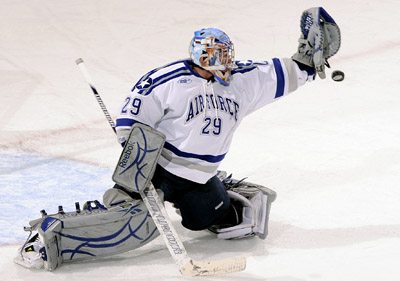
A few weeks ago I received an email from John, one of our community members. John enjoys sports photography and asked how much should he charge for prints of his images?

I’m trying to start selling some of my hockey pictures and I was trying to figure out if anyone or anything tracks the average price people are charging for a sports related 4×6, 5×7, 8×10, etc. My intention is not to undercut someone else but I definitely want to be competitive. So far I have found a couple of different sites and they vary widely in price. For example, I found the following prices for 8×10; $6, $19, $7 and $22.

Below is my response to John and I thought I would share it with the rest of our community. While some of my suggestions and comments are specific to John’s sports photography, they can be applied to any type of fine art photography.

There really aren’t publicized databases of what people are selling photos for. In fact most of what you’ll find online is either opinion, best guess or an average taken from several sources. The best way to determine pricing for your prints is to figure out your costs and determine what the market can bear.

Here are a few thoughts that will help to determine the cost of your time and materials needed to create your prints:

1. You already did some research and found varying prices for similar photos to what you’re creating. These numbers are good to know because they are your competition and if a consumer is looking for hockey photos most likely they’ll do similar research and stumble across the same sites.
2. Now you need to determine the “cost” of creating your prints. How much time do you put into the creation of your images?

+ Prep Time
+ Game Time
+ Post Game Time
+ Travel Time
+ Processing/Retouching Time
+ Printing Time
+ Matting/Framing Time
____________________________________
= Total Time spent to create your final product

Figure out a realistic hourly rate that you think your time is worth for each one of these tasks. Now break this number down into a per print cost. Keep in mind, you may shoot a couple hundred images while you’re at a game but most likely only a handful will actually be good enough to sell. For example, if out of 200 images you only have 10 that are good enough to sell, then take your total time and divide by 10 and that is your cost of time per salable image.

3. Since you’re just starting out selling your images it’s going to be hard to determine, but you need to figure in how much time you’ll spend marketing and promoting your photos and also the time involved with fulfilling the orders (processing credit card transactions, creating mailing labels, packaging the products, dropping packages at the post office/UPS/FedEx, etc.). Again figure out a realistic hourly rate for each one of these tasks, then you’ll want to break that down into a per print cost.

Note: You as the “artist” can command a higher hourly rate. So the time it takes you to create the final print should be figured out at that higher rate. Other than the marketing and promotion time, the fulfillment time should be figured out at a lower hourly rate. The reason being is, you are the only “artist” and theoretically the only one who is able to create your “art”. The time spent fulfilling the orders can be done by someone else for a much lower hourly rate. If you get so busy that you have to hire someone to fulfill your orders, you would be calculating their time at that lower rate. In the beginning you most likely will be doing everything yourself so you should plan on less per hour for those tasks. The flip side to this is, while you’re processing credit cards and packing up your prints, it’s time taken away from creating new images that you can sell. But in the end this is just the cost of starting and running a business.

4. You also need to figure out how much your total out of pocket expenses are for your printer inks, paper, frames, mattes, packaging materials, etc., and then break that down into a per print cost. This number will vary based on the size of the prints you’re creating. If you’re using an outside lab to create your prints, then it’s just a matter of adding in those costs.

This will get you down to the cost of your time and materials to create your product. This is the minimum amount you have to charge to be compensated for the creation of your product. If you can’t sell you prints for this minimum price then STOP here! Unless you want to share your images with the world for fun and the love of it, don’t bother moving forward as it will be a losing financial proposition.

So you’ve figured out a cost for your time and materials and found based on the market research you did, you’ll be able to sell your prints for enough to at least cover those costs. Now you need to figure out the “value” of your product to determine if you can make a profit. Consumers in general don’t have a real understanding of the value of art. Sure they know the paintings hanging on the wall in the museums are priceless but that’s because the artists are dead, right? The consumers “perceived value” of art is what we need to address. What do they think the photo is worth and how much are they willing to pay for it?

Portrait and event photographers are creating images unique to the customer. These images can’t be obtained elsewhere short of hiring another photographer. The customer has a perception of value that these photographic services hold. While photographers wish this perceived value was higher most of the time they are able to justify the costs to them. When you’re selling fine art photography it’s much harder to justify the cost of the prints to the customer. They either get it and are happy to pay or they don’t and won’t pay. Many look at fine art photography as a commodity that’s easily obtained. There are tens of thousands of photographers selling fine art prints online many of which share similar styles and looks. Because of this, selling your prints turns into more of a price battle than a true appreciation of art.

Here are a few questions and thoughts that will help you determine the “value” of your prints.

1. Are your hockey photos of professionals (I’m going to assume they are)? If so, how widely available are similar images? If you are shooting amateur players or youth leagues that’s a whole different story.

2. Are your photos posed portraits or action shots that you took at games? Did the players pose exclusively for you or did you shoot them from behind the boards? Why I’m asking is, if the players posed exclusively for you there is a little more value to the images because they are more unique. If they are action shots from behind the boards that anyone else could have made (and probably did) they are going to be more common and probably not as valuable.

3. Why would a customer buy your print over someone else’s? What makes your image unique and different? Developing a style or look is very important and will make more common shots look extraordinary. They will take on a higher perceived value of art and not that of just a snapshot.

4. Is the market flooded with images of this type? Sports images in general are very popular and available everywhere. You can find images online for free, you can go to your local sports store and find images sometimes signed, they’re in magazines… everywhere.

From the questions above if you determine your images are common to what’s out there then you really will only be able to charge what everyone else is. Prices may vary but even at the highest price of $22 for an 8×10, that’s not a lot of money for “art”. If you goal is to mass produce these prints and try to sell volume then the lower price is fine but you’re not really selling art at that point, you’re selling a widget.

If you want to sell “art” and take it to the next level you need to be different and offer something that no one else is.

1. Maybe you can make a few connections with some players and get them to sign some of your prints. You could sell them as numbered, limited editions that are matted and framed.

2. Develop more of an artsy style. Maybe it’s camera angle, maybe it’s the way you process the images. Make it unique and make it yours.

3. Focus on just one team to photograph and go after the diehard fans. True believers are willing to pay for great wall art to hang in their Man Caves.

4. Connect with charities and offer your art to be auctioned off in a fundraiser. The charity will take them on consignment and if they sell, will pay you the agreed upon price and keep the rest of the money for their cause. It’s a great way to help out a worthy cause and get your name out there at the same time. By the way, sports images sell great at charity golf outings.

These are just a few ideas on how to set yourself apart from the rest. There are many, many more ways, you just have to be creative in your approach.

So how much do you charge for “art” ? At very least you want to price the art at a 100% markup or double what your cost of time and material was to create it. If it costs you $50 to create an 8×10 matted and framed piece, you should easily be able to sell it for $100. The larger the piece the higher the percentage you can mark it up. A 16×20 matted and framed print that cost you $75 to create could easily be sold for $200 or more because the perceived value is higher. A larger piece takes up more wall space. Now if you really want to go big, look into the Gallery Wraps. A 30×20 might cost you $150 to create but you could easily sell it for $300+. The bigger and more unique your images are, the more they will be perceived as art and have a higher value to the average consumer.

View our Grow Your Business section for even more great
tips and ideas to help you succeed in business.

Marketing Campaigns for Photographers – The 1st Year Baby Promotion

This isn’t by any means a new type of promotion, in fact the MPA here in the UK have been running pretty much the same baby promotion since 1988 (Cherubs). It is however very successful and something that I have been using for a long time.

This marketing campaign does rely on a couple of things:

Leads… lots of them. Here in the UK there are a handful of places to buy in leads. For this campaign to be successful you do need to play the numbers game so it’s very much a case of spending a fair amount on those names and numbers.

An incentive. It could be a free photo or even a cash prize (the MPA promotion offers both).

The baby promotion offer

Three to four photography sessions all taken 3-4 months apart in the baby’s first year. It’s up to you whether you charge or not for the sessions but it might be worth charging a deposit refundable or otherwise. I’ve found charging a small sum of £20 works if you are shooting in a studio. Clients are a lot less likely to miss appointments if they’re already finically invested.
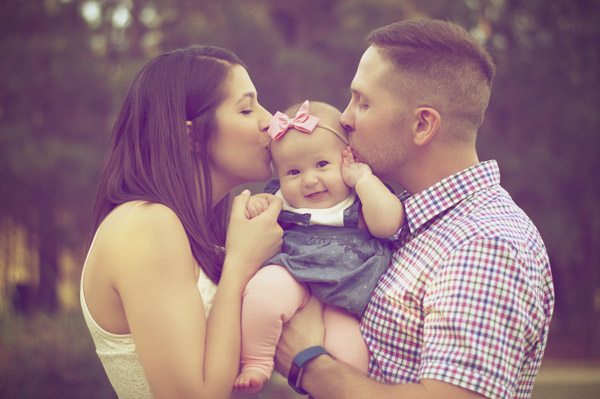
After each shoot you either host a viewing a few days later in your studio or at the clients home. Even if you’ve only been dealing with the baby’s mother try and arrange a viewing where both parents are present. Unfortunately this can be as much of a hindrance as it is a help as men in general are little less excited about baby photos.

Avoid online viewings. On occasion you might want to post a gallery online after a sale has been made for grandparents or extra orders.

Try and offer something different in each session. The first shoot could be nice and simple and with the baby on it’s own with the second and third introducing the parents and other siblings.

What to charge

If you are used to one off family shoots then my advice is expect your sales to be a lot less! On the other hand when you add up the total sales you make from all three shoots you should be making above your average for a single session.

I like to offer affordable products with a very high profit margin and introduce more expensive items in the second and third sessions.

Getting the booking

What type of leads you get. If you do get phone numbers then use them! Most likely your leads will be in the form of names and addresses so putting together a strong mail-out is important.

Include lots of different ways for people to contact you. Your phone number must be prominent on your literature but we also found having a dedicated baby photography contact form on our site to be really helpful.

We send out two sets of letters. The first is much larger than the second but the artwork is consistent throughout. The second letter normally has a call to action like ‘call within the next 4 days to take advantage of this offer…’ You might even want to include extra vouchers in your mail-out like money off or even free prints.

There’s no set formula, what works for some might not work for another so experiment a little bit but give each change at least three months to test its effectiveness.

What return to expect from mail-outs

Typically about a 5% booking rate is about average so that is also worth considering when you are thinking about how many leads to take on.

It’s a slow burner

In the beginning things will seem slow as this is an offer which can take quite some time to build momentum. In most cases it’ll be roughly 12-18 months before you reach the full potential of the offer. At that point you’ll not only be photographing sessions from new leads but also 2nd, 3rd and in some cases 4th sessions.

If in the first few months you think that the amount of bookings you are getting isn’t enough then just remember that in a years time that figure will likely triple (and hopefully so will your profits).

Variety

Three sessions on a white background isn’t that interesting so it is important to bring a bit of variety to each shoot.

We like to do at least one of the sessions on location in a local park or common and encourage more of a family photo-shoot element to the session. We also try and hold back on too many family shots when the baby is only a couple of months old as they sell better when the baby is a bit older and there is more interaction.

However you go about your 1st year baby promotion remember to keep in contact with the families after the third shoot and encourage them to refer you as much as you can (especially before mum goes back to work and is no longer attending yummy mummy coffee mornings).


View our Marketing Campaigns for Photographers section for even more great tips and ideas to help you grow your photography business.