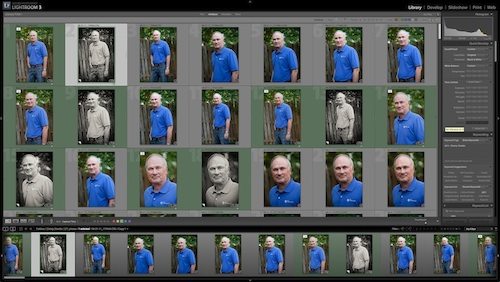
In today’s competitive photography world, it’s a must that the professional photographer carefully select the best images to give to the client and to process each of those photos to their very best. But for many photographers, especially photographers new to the market, or even just the hobby, dealing with a huge number of images can be, well, daunting. Many underestimate the importance of developing and adhering to a workflow that will help them remain efficient with their time and energy. After all, if you charge $300 for a 1 hour portrait session, but take 6 hours to sort and edit the photos, you’ve severely diminished the value of your time. If you’ve read Angelo Stavrow’s outstanding article, “Three Reasons You’re Not Ready to Shoot a Wedding”, this article aims to help you get past number 2.
When I first started my business in 2003, scheduling was difficult because it was hard to estimate how much time I’d have free for shoots and processing of the resulting images. It also added significant challenge to forecasting profits and establishing reasonable pricing structures that made the money worth my time and energy. Over time, we have developed a mature and consistent workflow which all photographers we work with adhere to. It helps to keep us consistent and timely in our delivery of images. As well as helping to ensure that those images are safe in the event of a disaster.
So, in the interest of helping newcomers work out their own strategies and start working on the important stuff as soon as possible, here are some of the things we’ve learned and you might want to keep in mind. At the end, I have also included a quick sample of a workflow using Adobe Lightroom. It’s fairly basic, but a good place to start if you find yourself stranded in a sea of awesome photos you don’t know what to do with.