Author Archive for Guest – Page 15

HDR for Your iPhone Regardless of its Model: by Pamela Flora

Lucky iPhone 4 users get automatic HDR (high dynamic range) photography simulation on their phones, built right in. But what if you’re stuck with your old 3G or 3GS? One thing you could do is to jailbreak your phone and install the new HDR feature (unofficially) on your older-model iPhone.

If you don’t want to jailbreak your iPhone, however, the only HDR solution for your 3G or 3GS is to use an app. There are a number of HDR simulators for the iPhone – HDR for Free, HDR Camera +, HDRcam, and others – but there are two that have grabbed the attention of iPhone users who snap a lot of pictures on their phones.

The first is Pro HDR, a $1.99 app that, well, simulates HDR photography on your phone. The second is TrueHDR, another $1.99 app which was recently updated to keep up with the photography Joneses. The Unofficial Apple Weblog recently ran a head-to-head comparison of both Pro HDR and TrueHDR, as well as the built-in HDR capabilities of the iPhone 4. Read More→
What Does Your Portfolio Say About You? by Deborah Kaufman

“Creativity is allowing yourself to make mistakes. Art is knowing which ones to keep.” Scott Adams

I was listening as Dave was editing one of his live shows the other evening and heard a question come up about how to define creativity. Creativity has always been something hard to nail down in my opinion. It’s subjective and too often a personal perspective, yet it is the key measurement by which all work is judged.

I’ve struggled with the concept of creativity and how to describe it for some time. As a fine art gallery owner for a number of years, finding pieces that had the ‘wow factor’ was always a challenge. I needed exceptional pieces in the gallery to keep the high-end collectors interested and the doors open. Selecting work for the gallery was more art than science. I always hated to turn down an artist or photographer because their work wasn’t creative enough. I toiled with how to let them down without hurting their feelings, only to realize that I was doing them a disservice to send them out without trying to explain why their work wasn’t measuring up.

I began watching collectors and studying their behavior in an effort to better define creativity. What I found was that no matter the genre, great work was like a magnet drawing people in. It didn’t matter whether they collected photography, abstract paintings or bronze sculptures; a collector would glance around the room, spot a piece that ‘spoke to them’ and immediately move to get a closer view. Read More→

Building Your Photog "Tweet" Cred

So you’ve gone ahead and created your very own Twitter account. You’re hoping to spread the word of your work and boost traffic to your website, blog, and maybe even cash flow. A few days, some weeks, a couple of months…  they all go by but nothing is really happening. What should you do? Write Twitter off as a failure?  Chalk it up to a misfired experiment? Nah. I think there is an interesting dynamic when you first create your Twitter account and the time shortly thereafter. That is to say, there are some noticeable phases or progressions that one goes through as they try to establish themselves as a resource for other photographers. I’ve gone through these phases in my attempt to be viewed as a credible HDR photography resource and I’m sure that everyone else has gone through similar paths to get to where they are.

Along the way of wading through your own Twitterverse field, you pick up slivers of ideas that either jive well or don’t. The key to navigating through this field is two-fold: the first revolves around how well you can actually pick up on these slivers and the second revolves around how effectively you deal with and manage them.

So, this is my attempt to share some of the practices that I religiously follow and wholly attribute to getting to where I am now and to how I have been able to meet, and shoot with, some of the most talented, fantastic, and generally great people in the industry. Read More→

Understanding the Art of Pricing Your Photography: by Deborah Kaufman

Have you been putting yourself on sale just to get the business lately? How many of you feel that twinge of guilt when you discuss fees with a new client? Feel as if you should apologize for your rate card?

In this economy, you’re probably not alone. There is a natural tendency to want to reduce fees in order to accommodate tight budgets. The truth is however, that when you dramatically reduce your rate (below 10-20%) you are diminishing your brand. You are teaching clients ‘bad tricks’ that they will use in future negotiations with you and setting yourself up for failure.

Pricing is always a tricky proposition. Customer psychology and market knowledge must be in balance in order for your pricing to work for you, instead of against you. Contrary to what you may believe, the lowest price is not always the most attractive to customers.

Some years ago, I owned a health newsletter company built solely on direct-mail marketing. We typically mailed 350,000 pieces each month. The postage cost then was nothing compared to what it is today, but nevertheless, when you’re dropping that many pieces every penny counts. Price was something we tested…and tested… and tested again, before we got it right. The experience taught me a lot about perceived value and pricing. I always assumed that if we lowered the price we would generate more response, after all…cheaper is better, right? What I learned was just the opposite. More times than not, the higher price lifted the response rate…and did so by a substantial percentage. I know you’re thinking this is crazy, but any marketer can tell you there are subtle nuances to getting the price right. And, perceived value is oftentimes greater with a higher price. Read More→

HDR Best Practices Guide – Part II: Image Management

So, you finished reading ‘HDR Best Practices Guide – Part I: In The Field’, and went out for a shoot. You had all of your wits and your gear about you when you set up your tripod and fired off those lovely brackets. You’ve got the raw materials (fine, pun partially intended) and now it’s time to refine them into something truly beautiful.

My original intent for Part II of this HDR Best Practices Guide was to delve into the actual tone-mapping and post processing steps around HDR. But, I felt that I would totally be glossing over an extremely important part of the whole HDR photography lifecycle by ignoring Image Management. So, I decided to devote Part II of this Guide to this topic because a clean home is a happy home. Part III will nose dive into the goodness of Photomatix, Photoshop, and everything in between.

I could write a whole book on the importance of image management. Many people already have. Your images are your primary, precious  resources. As such, they have to be properly cataloged and inventoried so that you know exactly what you are looking for, how to find it, and how to deal with it. Image Management is critical when you’re simply dealing with single images. Imagine what happens when you’re dealing with several brackets per HDR image. Here are some ‘Best Practices’ that I religiously follow to help prevent myself from losing sanity over my  abyss of brackets.

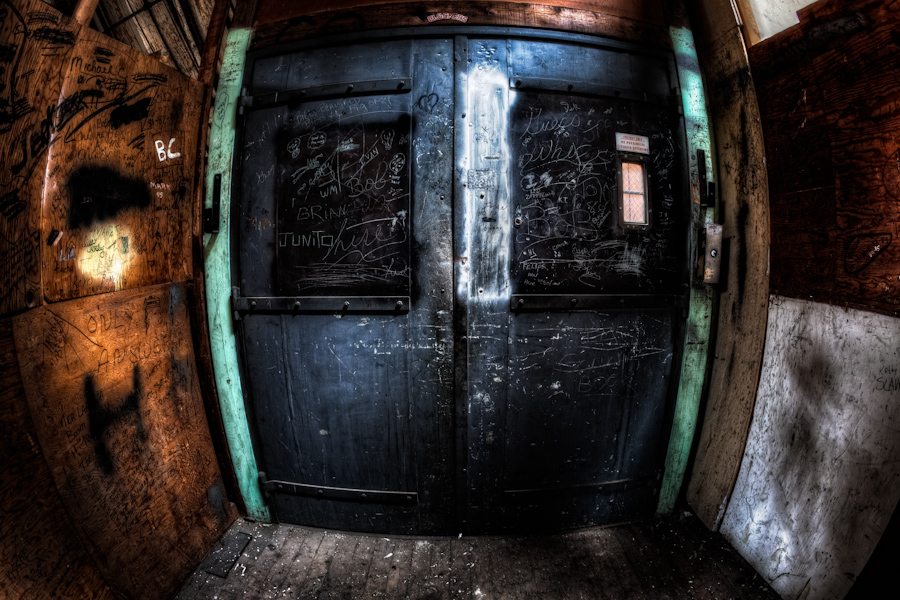
Canon EOS 5D Mark II, Canon EF 15mm f/2.8 Fisheye, 15mm, F 5.6, ISO 100, HDR, 9 Exposures – Click on image to enlarge

Read More→

Enlightenment Through Photography: by Marc Sadowski

Photography has always been a strong presence in my life. There were many moments where my path would point towards photography as my career, but I never went down that road. Instead, I became a reporter, I became a support employee, I became a web master, I became a graphic designer. It wasn’t until my life took a turn for the worse before I was able to follow my bliss.

Many, many years ago I was diagnosed with something called Meniere’s Disease. What is it? It’s a nasty bugger where your inner ear basically goes nuts and makes you dizzy. I had it pretty bad. How did I feel? As one comedian put it: “I had to hold on to the ground to keep from falling off the Earth.” That’s how I felt. The dizziness was intense and unbearable. The dizziness would happen at any moment and always unexpected.

My life – as I was experiencing it – felt like everything came to a standstill. It’s a weird limbo where time just kind of stands still. I was unemployed living with my folks and I had no idea how I was going to recover.

So I picked up my camera
I don’t want to say that photography was my escape from the illness. It’s not accurate. But when I was able to photograph, there were no expectations and when I held the camera my illness did not own me.

It was this picture that made me want to do photography full time:

Sprint Flower

Read More→