Archive for pricing

A Pricing Strategy That Actually Works: by Chris Horner

Pricing has to be one of the most volatile topics – next to Nikon vs Canon – that photographers discuss. There are numerous schools of thought on this subject. A scan through any photography forum will show heated debate from every side imaginable. Even seasoned photographers can grapple with this question.

On the subject of pricing, I’m only passionate about one thing – if you truly produce quality work then you should be properly compensated. Period. Stop giving away your talent for free. That’s not going to help anyone, least of all yourself. So just stop it.

As I was going through various pricing scenarios, I read a piece by Rosh Sillars. He argued to sell photography to clients on a per image price. Think of it like working on straight commission. Your client only pays for the images that they want from your shoot. It was an intriguing thought. And it’s a thought that made a lot of sense.

Think of it from a clients point of view. What are they worried about? They’re worried about you not performing, having to pay for something they’re not happy with, and then having to explain to their boss/client why they chose you and all they now have is subpar work coupled with a lot of wasted time and money. Do that too many times and you’ll find yourself unemployable. Often too they may balk at many ‘fees’ that can get tacked on – sitting fees, setup fees, fees for showing up, fees for breathing etc. The fees can begin to look like a bank brochure. The end result is an unpleasant conversation where feelings get hurt.

Per image pricing removes all of that.

With per image pricing, the client selects what they want from the shoot. If you produce crappy work, the client doesn’t pay, and you learn an expensive lesson equivalent to a quick, swift kick in the head. Conversely, if you produce stellar work, you can find a lot of flexibility in what the claimed budget was. All of a sudden you’re actually making more than what you originally anticipated – without doing more work.

It’s an interesting scenario. I decided to try it out. What I found was interesting to say the least.

It sure cut down on the questions from prospective clients. My pricing structure is outlined in plain English on my website. There’s no confusion or surprises. Instead, the conversations have centered on more deeply understanding their needs. It’s a much more productive discussion and eliminates much of the negotiation.

Sometimes you are pleasantly surprised. More than once I’ve entered discussions with prospective clients who tell me what their budget is. No problem. When I come back with the proofs, that budget miraculously grows as they pick out even more shots than what they may have originally wanted. Even better, it’s their choice to do so. No arm twisting, no slick talking, no begging, no negotiating. I’ve had clients come back later when their budget allowed and purchased more from previous shoots. The images are already done – it’s as easy as filling out an invoice, collecting payment, and delivering the images. Simple.

You can make more on a per hour basis. To figure out your per hour rate, take the number of images you sold from the shoot, and divide by the entire amount of time you spent on the job. I’ve been repeatedly astonished at this number. As you get better and more efficient at working in your craft, the per hour rate that you end up making would make a top end lawyer blush. In fact, if I took the last few shoots that I did and reworked my website asking for that equivalent hourly rate, I’d probably never land another client again. Goodness knows if I went to my day job and asked for that rate I would be laughed out of the room and fired. But at the end of the day, what does the client care about? They really just want quality images at a fair price. If you deliver truly high quality work that truly wows your client, you’ve created value and justified your pricing. Everyone wins.

I screwed up a shoot before. That’s when I discovered I have no business shooting portraits. I collected no money upfront. I botched the job. The client wasn’t happy. Heck I wasn’t even happy with what I produced. When he asked what he owed, I said nothing. I said I was sorry and provided the name and number of a more qualified photographer. He was impressed with my professionalism and we parted ways on good terms with only a total of about 30 minutes of our lives wasted on the interaction.

Me? I’m a firm believer. I’ll never go back to doing it any other way. If you’re finding it hard to crack the code on your pricing, sit down and crunch the numbers. Test it on a few clients to gauge reaction. You too may be very pleasantly surprised at the results.


–

Chris HornerI am a freelance photographer based in Charlotte, NC that specializes in fine art prints and commercial photography. Much of my work is based on urban scenes.  I believe that each image needs to tell a story, to stand on its own, and that’s what I strive for with each click of my camera.

That goes not only for my art but for my commercial work as well. I enjoy working with businesses, helping them create images that excite their clients and promote their business in a professional manner. That work has been featured in projects commissioned by Ann Arbor Tortilla Company, 2NRCARZ, Fine Interior Finishes, and the Schmap Guide to Detroit.

Some of my more artistic images have received recognition in Smashing Magazine for a worldwide photo contest that they conducted, in both the 2010 and 2011 Comerica Bank corporate calendars, and have been honored several times as Photo of the Day in Light and Composition Magazine.

Photo/Video Credits: © Chris Horner


Here’s how you can share your tips, techniques and tutorials on CurrentPhotographer.com
 

How to Determine a Price for Your Fine Art Photography

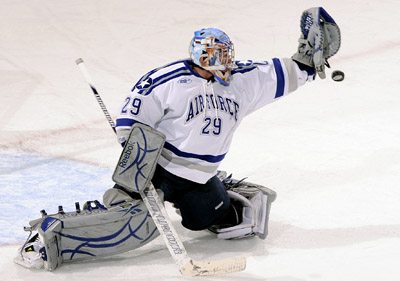
A few weeks ago I received an email from John, one of our community members. John enjoys sports photography and asked how much should he charge for prints of his images?

I’m trying to start selling some of my hockey pictures and I was trying to figure out if anyone or anything tracks the average price people are charging for a sports related 4×6, 5×7, 8×10, etc. My intention is not to undercut someone else but I definitely want to be competitive. So far I have found a couple of different sites and they vary widely in price. For example, I found the following prices for 8×10; $6, $19, $7 and $22.

Below is my response to John and I thought I would share it with the rest of our community. While some of my suggestions and comments are specific to John’s sports photography, they can be applied to any type of fine art photography.

There really aren’t publicized databases of what people are selling photos for. In fact most of what you’ll find online is either opinion, best guess or an average taken from several sources. The best way to determine pricing for your prints is to figure out your costs and determine what the market can bear.

Here are a few thoughts that will help to determine the cost of your time and materials needed to create your prints:

1. You already did some research and found varying prices for similar photos to what you’re creating. These numbers are good to know because they are your competition and if a consumer is looking for hockey photos most likely they’ll do similar research and stumble across the same sites.

2. Now you need to determine the “cost” of creating your prints. How much time do you put into the creation of your images?

+ Prep Time
+ Game Time
+ Post Game Time
+ Travel Time
+ Processing/Retouching Time
+ Printing Time
+ Matting/Framing Time
____________________________________
= Total Time spent to create your final product

Figure out a realistic hourly rate that you think your time is worth for each one of these tasks. Now break this number down into a per print cost. Keep in mind, you may shoot a couple hundred images while you’re at a game but most likely only a handful will actually be good enough to sell. For example, if out of 200 images you only have 10 that are good enough to sell, then take your total time and divide by 10 and that is your cost of time per salable image.

3. Since you’re just starting out selling your images it’s going to be hard to determine, but you need to figure in how much time you’ll spend marketing and promoting your photos and also the time involved with fulfilling the orders (processing credit card transactions, creating mailing labels, packaging the products, dropping packages at the post office/UPS/FedEx, etc.). Again figure out a realistic hourly rate for each one of these tasks, then you’ll want to break that down into a per print cost.

Note: You as the “artist” can command a higher hourly rate. So the time it takes you to create the final print should be figured out at that higher rate. Other than the marketing and promotion time, the fulfillment time should be figured out at a lower hourly rate. The reason being is, you are the only “artist” and theoretically the only one who is able to create your “art”. The time spent fulfilling the orders can be done by someone else for a much lower hourly rate. If you get so busy that you have to hire someone to fulfill your orders, you would be calculating their time at that lower rate. In the beginning you most likely will be doing everything yourself so you should plan on less per hour for those tasks. The flip side to this is, while you’re processing credit cards and packing up your prints, it’s time taken away from creating new images that you can sell. But in the end this is just the cost of starting and running a business.

4. You also need to figure out how much your total out of pocket expenses are for your printer inks, paper, frames, mattes, packaging materials, etc., and then break that down into a per print cost. This number will vary based on the size of the prints you’re creating. If you’re using an outside lab to create your prints, then it’s just a matter of adding in those costs.

This will get you down to the cost of your time and materials to create your product. This is the minimum amount you have to charge to be compensated for the creation of your product. If you can’t sell you prints for this minimum price then STOP here! Unless you want to share your images with the world for fun and the love of it, don’t bother moving forward as it will be a losing financial proposition.

So you’ve figured out a cost for your time and materials and found based on the market research you did, you’ll be able to sell your prints for enough to at least cover those costs. Now you need to figure out the “value” of your product to determine if you can make a profit. Consumers in general don’t have a real understanding of the value of art. Sure they know the paintings hanging on the wall in the museums are priceless but that’s because the artists are dead, right? The consumers “perceived value” of art is what we need to address. What do they think the photo is worth and how much are they willing to pay for it?

Portrait and event photographers are creating images unique to the customer. These images can’t be obtained elsewhere short of hiring another photographer. The customer has a perception of value that these photographic services hold. While photographers wish this perceived value was higher most of the time they are able to justify the costs to them. When you’re selling fine art photography it’s much harder to justify the cost of the prints to the customer. They either get it and are happy to pay or they don’t and won’t pay. Many look at fine art photography as a commodity that’s easily obtained. There are tens of thousands of photographers selling fine art prints online many of which share similar styles and looks. Because of this, selling your prints turns into more of a price battle than a true appreciation of art.

Here are a few questions and thoughts that will help you determine the “value” of your prints.

1. Are your hockey photos of professionals (I’m going to assume they are)? If so, how widely available are similar images? If you are shooting amateur players or youth leagues that’s a whole different story.

2. Are your photos posed portraits or action shots that you took at games? Did the players pose exclusively for you or did you shoot them from behind the boards? Why I’m asking is, if the players posed exclusively for you there is a little more value to the images because they are more unique. If they are action shots from behind the boards that anyone else could have made (and probably did) they are going to be more common and probably not as valuable.

3. Why would a customer buy your print over someone else’s? What makes your image unique and different? Developing a style or look is very important and will make more common shots look extraordinary. They will take on a higher perceived value of art and not that of just a snapshot.

4. Is the market flooded with images of this type? Sports images in general are very popular and available everywhere. You can find images online for free, you can go to your local sports store and find images sometimes signed, they’re in magazines… everywhere.

From the questions above if you determine your images are common to what’s out there then you really will only be able to charge what everyone else is. Prices may vary but even at the highest price of $22 for an 8×10, that’s not a lot of money for “art”. If you goal is to mass produce these prints and try to sell volume then the lower price is fine but you’re not really selling art at that point, you’re selling a widget.

If you want to sell “art” and take it to the next level you need to be different and offer something that no one else is.

1. Maybe you can make a few connections with some players and get them to sign some of your prints. You could sell them as numbered, limited editions that are matted and framed.

2. Develop more of an artsy style. Maybe it’s camera angle, maybe it’s the way you process the images. Make it unique and make it yours.

3. Focus on just one team to photograph and go after the diehard fans. True believers are willing to pay for great wall art to hang in their Man Caves.

4. Connect with charities and offer your art to be auctioned off in a fundraiser. The charity will take them on consignment and if they sell, will pay you the agreed upon price and keep the rest of the money for their cause. It’s a great way to help out a worthy cause and get your name out there at the same time. By the way, sports images sell great at charity golf outings.

These are just a few ideas on how to set yourself apart from the rest. There are many, many more ways, you just have to be creative in your approach.

So how much do you charge for “art” ? At very least you want to price the art at a 100% markup or double what your cost of time and material was to create it. If it costs you $50 to create an 8×10 matted and framed piece, you should easily be able to sell it for $100. The larger the piece the higher the percentage you can mark it up. A 16×20 matted and framed print that cost you $75 to create could easily be sold for $200 or more because the perceived value is higher. A larger piece takes up more wall space. Now if you really want to go big, look into the Gallery Wraps. A 30×20 might cost you $150 to create but you could easily sell it for $300+. The bigger and more unique your images are, the more they will be perceived as art and have a higher value to the average consumer.

View our Grow Your Business section for even more great
tips and ideas to help you succeed in business.

Marketing Campaigns for Photographers – Publishing Prices Part 2

Last week’s marketing campaign [Publishing Prices] was the first part of 2 looking at publishing prices on your photography website. I suggested two options which you might want to experiment with and here are the next two options:

3. No Pricing
It’s surprising how many photographers go for this option. Often you’ll see prices tab or perhaps a more popular term these days ‘investment’ and when you click it you’re faced with a contact form. It’s quite a cheeky call to action but it’s certainly better than having no suggestion of pricing whatsoever.

If you aren’t going to give away any numbers then at least hint towards the possibility that you might be either quite cheap or very expensive. Language is a wonderful tool so use it to it’s full potential.

Words like luxury and bespoke suggest you’re tailoring towards the high end of the market whereas affordable and competitive suggest something different altogether.


4. Login for prices

This forth option is probably the best of all as not only can your potential clients receive instant gratification but you also get their information. Read More→

Marketing Campaigns for Photographers – Publishing Prices

A well known photographer once told me “The only reason people ask how much is that it is the only question they have.” In some respects this is true but the decision to publish prices and rates on your website can make a dramatic impact on your online marketing efforts.

It’s always been my belief that if you are going to publish your prices on your website then it should be because you are either incredibly cheap or incredibly expensive. In truth there is no real right or wrong way…… well actually that’s not strictly true. The wrong way would be not to experiment. For this reason this marketing campaign has four different options. (The next part of this article will be published next week). I’ll let you decide if you are going to try all or none of them but I would suggest that you do try out at least a couple of them.

1. Prices published in full
Arguably we live in a ‘compare the market’ world and I for one find it frustrating if I can’t immediately find the price of something on a website. The only problem with answering the only question that people might have is that they don’t have a reason to contact you other than to book a session or meeting with you.

This will result in a much higher enquiry to booking ratio and probably increase the quality of your clients as well. Whilst it does act as a filter for time wasters at the same time you might scare away others before you have had a chance to properly sell yourself.

You do also open yourself to being undercut by the competition but even if this does happen just ignore it. The worst thing you could do for your business is to get into a price war. There will always be someone doing better work than you for cheaper. Once you accept that you can move on and worry about more important things.

Read More→

Starting a Photography Business: Part 36 – Old Foes

An old friend came to town this last week and I think my friend has been having more fun than me catching up.  The old friend I speak of is my old foe; pricing.

We’re just starting to get all our prices together for the holiday tour and it’s kind of interesting. I’ve just had a moment of looking at all the figures, thinking oh no they are getting a little bit scary now and it’s all getting a bit real, and then I realised; hello, hello hello, here’s my old friend. I didn’t enjoy you first time around and guess what; I’m not going to jump into your swirling pool of gloom this time around. I’ve seen you lurking in that dark corner of my mind and I’m showing you the door.

It’s interesting though isn’t it how we deal with an issue and then feel stronger because we’ve dealt with it, and then have to deal with it all over again when it comes back to visit again a little while later. It’s been a while since we’ve been here but here it is again, though I caught it and I feel quite good about myself for realising what was going on.

Quite often when I find myself getting a little bit tense about hotels taking a while to get back to us, or writing proposals to do photography workshops in local hotels, I take a deep breath and come back into the moment. I stop and realise that gosh a year ago I was no near this point and this is a pretty fantastic thing I’ve done to launch a business, and now we’re talking about photography holidays and I’m moving on with a second business which is photography related. Read More→

Starting A Photography Business: Part 9 – 2+2 is 4

Yippee, it’s time to work out how much money we are going to make and how much profit we are going to get from our pictures, well gosh I wish it had been that easy.  It was as if it was a trade secret or something, how to work out costings and how to work out profit and how to work out how much to charge.  Yes sure, I’d had a look around some photography websites and been a little scared at the prices people were charging as they seemed so low.

I read an article in an art magazine that said you price accordingly depending on whether you are full or part time in your creations.  Now for me I don’t see why that makes any difference; the chances are you’ll spend the same amount of time taking a photo whether you are working full time or part time and why should working part time mean that your picture is worth any less?  And if you are working part time looking to become full time and you work on that philosophy you are eventually going to have to increase your prices so you can afford to live and maybe scare away loyal customers.

For me, it’s important to find a price that I am comfortable with and that I think is a fair price for my work and one that will support me.  I asked so many people how to do pricing, I went to my local chamber of commerce and got a very long winded answer but it never gave me the answer that I needed, it seemed like that there was no set formula, I asked everyone I could think of until finally a friend suggested I list all my costs put on my profit, take the total and divide it by the total number of days in the year to get the total cost of one unit.  It seemed like a perfectly simple idea to me so that’s how I’ve done my pricing.

Strangely enough since doing my pricing I’ve been talking to people and discovered that’s exactly how they’ve done theirs too.  I really don’t understand why it’s such a secret.  You don’t have to reveal what your costs are, you don’t have to reveal what your profit margin is but I think it’s helpful to explain to a novice like myself that this is one way of working it out, I’m sure there are plenty of others ways too. Read More→