Archive for Make Better Photographs – Page 18

Guide to Keywording Images – Part 4: by Jody Apap

How Do I Keyword the Objects in My Image?

This is the fourth in a series of posts about how to keyword your images. While this guide is written primarily for stock photographers who need great keywording to ensure robust sales of their images, any photographer or image librarian would do well to think about the concepts being covered.

This post will cover the details of keywording the WHAT in your images, basically anything that is a “thing” in the image, including the subjects of the image and the background things.

The first thing you should be keywording is the number of objects, animals or servings of food shown in the image.

  • one object
  • two objects
  • three objects
  • four objects
  • many

The object keywords should be used for the main subjects of the image, a close up of three balls. Don’t try to count all the objects in the image, just the subjects. Think of a child’s counting book, it should be instantly obvious what is being counted and how many there are.

  • one animal
  • two animals
  • three animals
  • four animals
  • group of animals
  • one serving
  • two servings
  • three servings
  • four servings

The animal and serving keywords have less strict guidelines for use. Any animal in the image should be counted, and any serving of food, as long as easily seen should be counted.

While this first step in keywording objects is pretty straightforward, choosing which objects to keyword and which to ignore is a source of debate and difficult, if not impossible, to definitively define. Read More→
Guide to Keywording Images – Part 3: by Jody Apap

How Do I Keyword the People in My Images II

In my last post I covered the major elements to keywording people:

  • Number of People that are the subject of the image.
  • “Industry standard” age/gender groups such as male adult and female senior adult.
  • Family relationship portrayed in the image.
  • Ethnicities or races of the people in the image.

This post will cover a lot of the other keywords you should be adding to your images of people.

Angle of View and Body Length

These two are much more important that you might think.  Editors often know what kind of shot they are looking for and these are two qualities that they are often looking for.

There are three basic angles of view:

  • front view
  • side view (profile is a type of side view)
  • back view

Every person has one of these angles to the viewer, so you might as well keyword it.  A few other searches at Alamy.com gave me these results:

  • woman: 2,580,483 results
  • woman front view:  282,273 results
  • woman side view:  158,651 results
  • woman back view:  54,448 results

Less than 20% of images with women in them have any angle of view keywords with them.  A rough extrapolation indicates that there are about 1,000,000 images of women that are front views that would not be shown to buyers looking for women front view.

Read More→

Dealing With Less Than Cooperative/Absent Guests

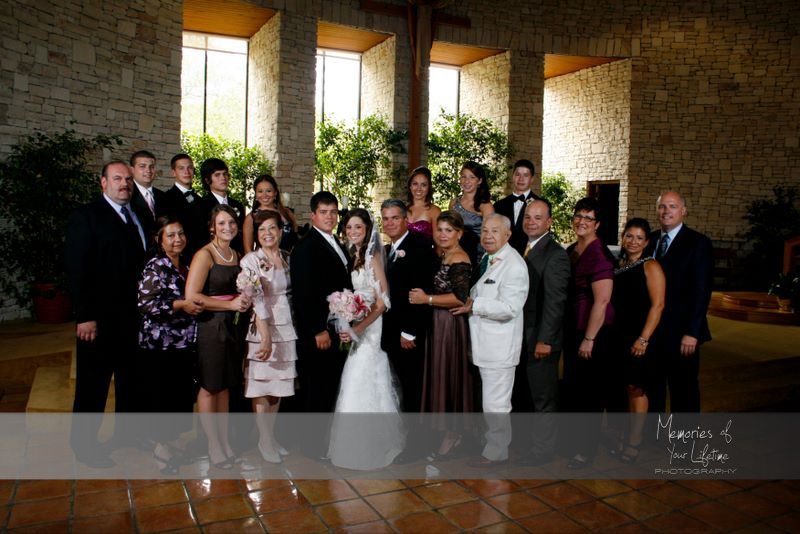
There is a critical piece of CYA that I incorporate into my wedding contracts that I never thought I would need but got the idea from reading about other photographer’s experiences. The responsibility of capturing important people in the formal photos and ensuring they are present to be in the photo. In one of my previous posts I discussed the possibility of having to deal with less than cooperative guests. I wanted to expand on that and more specifically narrow that down to the formal wedding photos and the guests that are included in them.

Formal wedding photos can be a frantic situation for a new or shy photographer. Generally you have a very limited window to get a very large number of people set up in several different poses with people who all want to move onto the party all while trying not to sweat to death and maintain your professionalism. The most important thing to do is maintain an element of control. You are the paid photographer, you are in charge. Yes, Aunt Sally may want to get a quick shot but unfortunately, you are on a schedule and that schedule doesn’t allow for Aunt Sally to hold the show up. On top of that you realize that Grandma and Grandpa decided that they wanted to high tail it to the reception. What to do now? Read More→

Scenic Outlook – Autumn Approaches

If I’ve timed this right then Autumn/Fall should be upon us, at least for those of us in the northern hemisphere. If summertime didn’t quite grab you enough to get you out of bed at ridiculous times of the day then autumn sure will. Due to the higher position of the Sun during the summer months the light is often very strong giving less definition to the landscape. In addition to this the grass will be green as will much of the leaves on trees and bushes, nice for us to look at but very often does not translate into photographs very well, this is because you end up with a mass of greenery in the picture and it becomes very difficult for us to see all the elements individually. During Autumn however, this all changes, with nearly all of the trees foliage gradually turning from greens through to yellow then to reds, and all at different rates.

This display of colours combined with the ever lowering position of the sun creates some of the most beautiful scenery nature has to offer. As I’ve said before, being out both during early morning and late evenings pays dividends for your photography as all these wonderful colours are brought to life, being more saturated with the warm glow of the rising/setting Sun. Read More→

Guide to Keywording Images – Part 2: by Jody Apap

Last week I wrote an introduction to my guide to keywording, emphasizing the reasons that you need to give some time and thought to your keywords, and there will be a direct increase in sales if you do. This week, I will delve into the details of keywording people. People are such an important part of stock images, and buyers will be searching for a lot more than just woman or boy.

A search for woman at Alamy.com returned 2,608,284 images.  Obviously way too many to search through, so buyers almost always start adding other keywords to the search.

So, for example, they know they are looking for an image of just one woman, and a search for one woman only gets 322,700 results.

But, in quickly looking through these images, they realize they need a Caucasian woman search for one woman only Caucasian gets 173,633 results.

Then the searcher adds living room and front view, and a search for one woman only Caucasian front view living room gets 520 results.

You get the idea. You need to get found in the last search because your image has a much better chance of being seen and bought. If you didn’t get seen in that last search because your image didn’t have one of the qualities, that’s fine, it wasn’t going to get purchased by that buyer anyway. But what if your image did have all those qualities, but was lacking the right keywords? Then you might have missed a sale.

Alright, let’s get to the list of people qualities you better be keywording, starting with an obvious one that is often missed by photographers:

How many people are in your image?

  • one person: these first five keywords are used to describe the number of people who are the subject of the image.
  • two people
  • three people
  • four people
  • five people
  • group of people:  GettyImages divides this into small group of people, medium group of people and large group of people and you might as well follow their lead.
  • nobody or no people: use both, every time there are no people in the image.
  • background people:  use this every time there are people in the image who are not the subject of the image, whether in the background or foreground, and regardless of whether there are other people as the subject of the image or not.

Read More→

Guide to Keywording Images – Part 1: by Jody Apap

In my years as an image keywording specialist, I keyworded nearly 250,000 images (yep a quarter of a million). To keyword all these images, consistently and comprehensively, I had to have a system to methodically go through each image. Without a system, there simply is no way to ensure consistency and accuracy.

Image recognition software still has a long way to go before it can come even close to manual Keywording, so you need to learn how to do it well. In a series of six weekly posts, I will show you a way to systematize how you look at an image to come up with all the appropriate keywords.

The first step is to start dividing your image. Actually, what we are doing is parsing out the language you are using to describe the image, into manageable parts. There are many useful and logical ways to make these divisions, but this is my preferred method.

I first divided up my potential keywords into six buckets:

  • WHO: Describe the people in the image
  • WHAT: Describe the objects in the image
  • WHERE: Describe where the image was taken
  • WHEN: Describe when the image was taken
  • WHY: Describe the actions, emotions, concepts and adjectives shown in the image
  • HOW: Describe any and all photographic techniques used in taking the photo

I know, it’s not perfect, but it has a certain ring to it, and it works. I guarantee you that if you did nothing more than just use this punch list as you were keywording, you’d be doing a better job than most photographers. However, I still highly recommend reading the following posts as I will drill down into each group and explain both what to look for, what to keyword, and teach you some of the industry standard keywords to help you connect with buyers. Read More→