Archive for Make Better Photographs – Page 19

Dealing With Less Than Cooperative Wedding Guests

Ah yes, the age old problem. Open Bar + Close Proximity To Others + Party = the Less Than Cooperative Guest. It’s something that we’ve all had to deal with and if you haven’t yet as a wedding photographer, you will. There is always the one guest that has had a little too much to drink and either offers an abundance of unsolicited advice or proceeds to just make your night rough. As a professional you should remember that you are there at the request of the wedding couple and most importantly, you have a job to do. This is business, nothing personal.

I’ve had this happen to me unfortunately on a couple of occasions. I’ve had the “friend” who is a photographer come up to me and try to “one-up” me on everything from equipment, to style, to poses for photographs. I’ve also had the gentleman who’s had one too many proceed to try and get in every single photo I took whether he was supposed to be in the shot or not. These kinds of things are going to happen and these aren’t the kind of things your photography class instructor probably went over very much when you took their crash course. The most important thing to remember is to maintain your composure. Most of the time they don’t have a clue who you are and are just talking to someone who will listen. I make it a point to try and be as professional and courteous as possible and let them know that unfortunately I don’t have a lot of time to chit chat right now that the bride and groom are on the move. You will learn what works best for you the first few times you use it.

As for the wedding guest who insists on trying to get in every shot that I am taking whether invited or not, that is going to take a little more tact and a little more “air of authority” in your voice. I make it a point to lower the camera and with a smile on my face, politely ask the guest to please step aside for just a few seconds while I gather this shot. Most of the time they will comply. If in the event they do not, you have a few options but one that I would probably employ is simply to ask the guest you are trying to focus on to simply change their location so as you might get their shot without interruption. I’m sure they will be more than accommodating.

Read More→

Scenic Outlook – Choosing Your Horizon

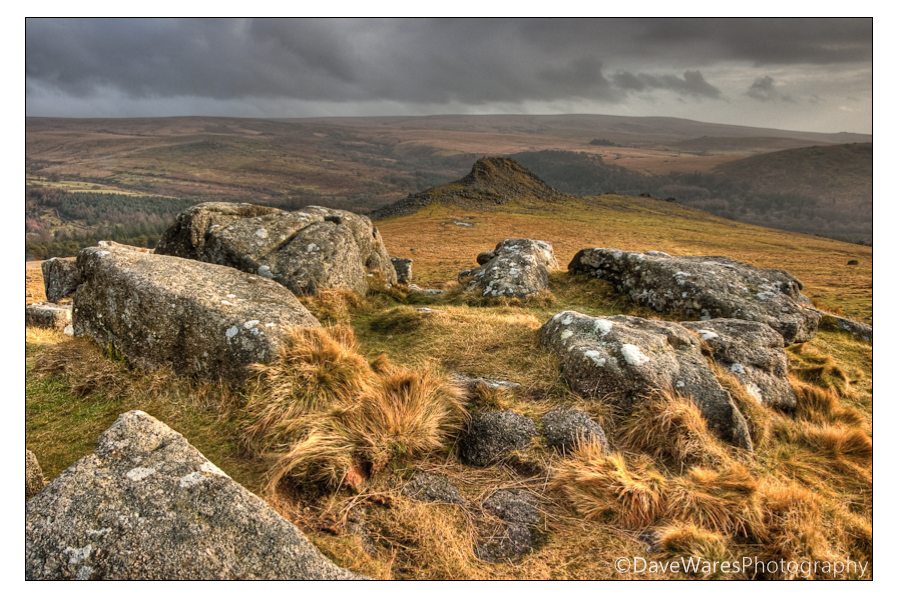
When out in the field and faced with a fabulous scene in front of you, there are three choices to consider when it comes to where you should place your horizon; Top, middle, bottom. Positioning the horizon in one of these three places will dramatically effect the perspective of the picture and will help to give your photographs a more dynamic edge. Generally speaking, the casual snapper and beginner photographer will tend to put their horizons more or less dead centre, as this is the way we usually see the world from a standing perspective. However, this tends to give pictures an unnatural balance with the photograph feeling as if it should be viewed as two halves. There will be times though, that placing your horizon in the middle will work a treat.

Lets look at some examples below.

Top:

Read More→

How Far Do You Go?

How far do you go in pursuit of a photo? Whichever genre we take photos in, portrait, journalism, landscape or any other niche, we all push the limits of our trade in experimenting. Be it in the way we take the photo, pushing time exposure, fstops, white balance and ISO settings.

How much do we push the boundaries though of what we use as a subject? I will quite often walk through a farmer’s field to capture a scene from a different angle, though never if there are crops growing.

When I’m out and about either in the car or walking I’ll take unknown roads or footpaths to explore and if there’s a bend in the road then that’s it; I just have to see what’s round it. It’s always that alluring bend in the road isn’t it? You just have to see what secrets it hides. Some of my greatest finds have been down unused roads or overgrown footpaths or bends in the road.

For me that is the great thing about landscape photography; it allows me the opportunity to explore new places and in turn learn a lot about me. When I have my camera in hand I feel like an intrepid explorer even though despite being deep in the countryside, I’m rarely further than a mile from civilisation!

A few weeks ago I was back in my favourite local village and exploring a footpath alongside the mere. The footpath crosses stiles, open farmland and woodland. In the woods as the sun was dropping lower in the sky I could see a blanket of bluebells; patches of which were being softly lit. I was unable to get across to the bluebells as a brook lay between me and the wood and a barbed wire fence. You know what it’s like when your imagination has been fired, the bluebells looked so beautiful in the light, and I wanted to be able to take some shots. Read More→

Controlling Efficiency in Photo Processing: by William Petruzzo

In today’s competitive photography world, it’s a must that the professional photographer carefully select the best images to give to the client and to process each of those photos to their very best. But for many photographers, especially photographers new to the market, or even just the hobby, dealing with a huge number of images can be, well, daunting. Many underestimate the importance of developing and adhering to a workflow that will help them remain efficient with their time and energy. After all, if you charge $300 for a 1 hour portrait session, but take 6 hours to sort and edit the photos, you’ve severely diminished the value of your time. If you’ve read Angelo Stavrow’s outstanding article, “Three Reasons You’re Not Ready to Shoot a Wedding”, this article aims to help you get past number 2.

When I first started my business in 2003, scheduling was difficult because it was hard to estimate how much time I’d have free for shoots and processing of the resulting images. It also added significant challenge to forecasting profits and establishing reasonable pricing structures that made the money worth my time and energy. Over time, we have developed a mature and consistent workflow which all photographers we work with adhere to. It helps to keep us consistent and timely in our delivery of images. As well as helping to ensure that those images are safe in the event of a disaster.

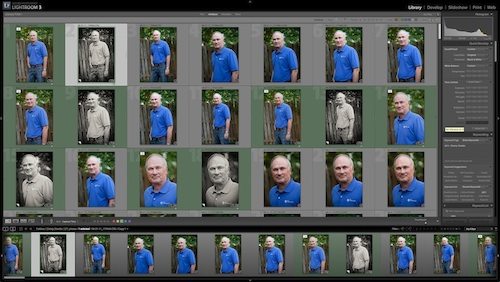
So, in the interest of helping newcomers work out their own strategies and start working on the important stuff as soon as possible, here are some of the things we’ve learned and you might want to keep in mind. At the end, I have also included a quick sample of a workflow using Adobe Lightroom. It’s fairly basic, but a good place to start if you find yourself stranded in a sea of awesome photos you don’t know what to do with.

Read More→

Scenic Outlook – Go Portrait

When it comes to landscape photography it may seem perfectly logical that you should keep your camera in a horizontal/landscape position, usually we are confronted by sweeping vistas and sometimes even the widest of lenses just doesn’t seem to be enough to fit it all in. However, turning your camera to a vertical/portrait position can be equally rewarding and in fact may help to improve your pictures in certain situations.

The strength of any picture will always be partly down to how you choose to compose the frame. I always take a few moments to have a good look at what’s in front of me, deciding what elements are available to help draw the viewers eye through the scene. Take a look at the picture below.

Read More→

The Art of Being Inconspicuous

Weddings are very expensive, very personal, very intimate events to be shared by the wedding couple and their closest friends and family. It’s a time when two people promise before the world their love for one another and their commitment to each other till death do them part. It’s truly a once in a lifetime event. Never again will these two people stand together at this moment, in front of these people, saying these words to one another. The last thing they want is some goofy photographer running around getting in the way and causing a distraction! It’s our job as professionals to not become part of the event but to simply capture the event for the couple and their family to enjoy for generations to enjoy.

I know it’s hard to stay inconspicuous while at the same time capturing once in a lifetime moments but it can be done. I am a 6’ 2” 300lb beast of a man and I can blend in with the best of them. The trick is being aware of your surroundings. Plan out your shots.  Be familiar with the schedule of the event so you know when and where to be for all the right moments. There is no reason to be running up and down the aisle if it’s not necessary. Many ministers don’t appreciate it and most of all your clients and their guests will not appreciate the distraction. Here are some tips I employ to practice what I call non-invasive wedding photography.

Invest in a quality long lens. Somewhere in the 70-300mm area and make sure it has IS (image stabilization). These lenses take great photos, are wonderful at getting close-ups of the ring exchange and first kiss as well as capturing those intimate fleeting moments between the bride and groom all the while letting you remain behind the wedding guests but still able to capture wonderful images. Long lenses allow you to be where you need to be without you being in the way. Ever heard the expression “you make a better door than you do a window”? Guests will appreciate it that you are not distracting them from an event. I attended an event one time where the photographer had an assistant who was holding 2 slave flashes and he had the master on his DSLR. He was running (literally running) up and down the aisles to capture that shot. When the bride and groom were leaving back down the aisle he had all flashes going off in front of them as he and the assistant walked backwards down the aisle not 8 feet from the bride and groom. It was distracting, I was distracted. I don’t remember much about that wedding but I remember a lot about that photographer and that is not the kind of memory we want to be remembered for. Read More→