Archive for filters

Scenic Outlook – Brief Moments

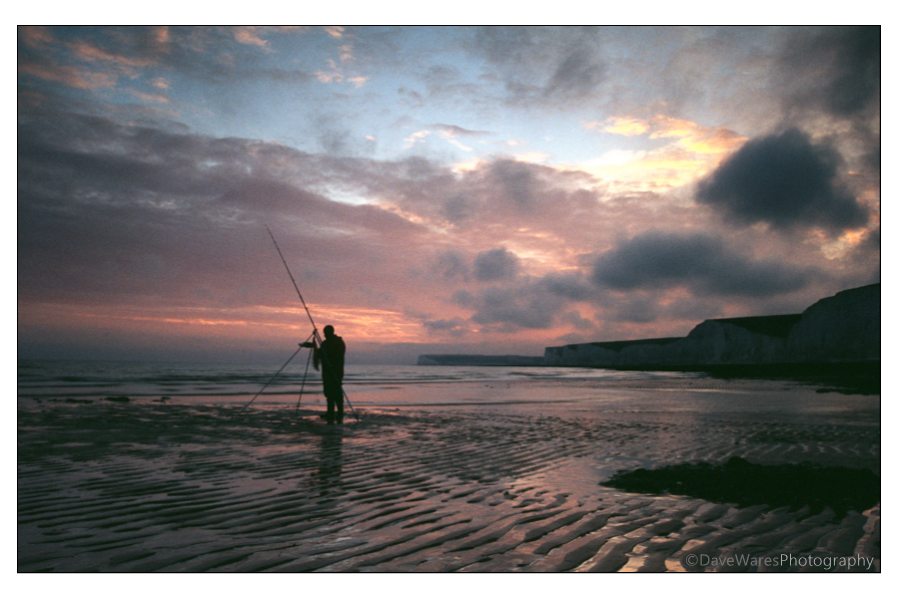
What with one thing and another I’ve not had as much time over recent weeks to get out with the camera, but on this particular December weekend I have an empty slot on a Sunday morning. Friday’s weather report says that Saturday will be rainy all day but that Sunday will be cloudy with sunny intervals. Right then, decision made my cousin Steve and I make arrangements Friday afternoon to meet up early Sunday morning at Winchelsea beach. Saturday comes and goes with not a drop of rain all day, I look at the weather report on my HTC…Sunday=rain. Oh well, I decide that I’ll go out anyway however the weather should turn out. I text Steve to see if he’s still up for a meet and a moment later he replies to say that he too is up for getting out whatever the weather. Sunrise is about 7.40am so I decide to set my alarm for 6am.

5.35am my phone rings. ” Are you up Dave” says an all too alert sounding Steve. “I am now” I reply, trying to open my eyes. “I woke up early so I got up and now I’m about to head out the door” Steve said, “OK, I’ll meet you there” I say, fumbling about trying to find my things. Right, I’d better get a move on.

6 seconds iso200 @f22, ND4 filter, Grey Grad

Read More→

Scenic Outlook – Balancing the Scene Part 1: Graduated Filters

As a landscape photographer one of the big difficulties you’ll face will be trying to achieve a balance between the land and the sky. During normal daytime hours this won’t be an issue but as we know the best times to be out is during the golden hours either end of the day. At these times the sky will be much brighter than the land and although our eyes adjust pretty well to this kind of scenario our cameras just won’t be able to cope with the huge difference in contrast. This means you will have to compromise by either metering mainly for the sky which would result in a dark landmass, or metering for the land which would more than likely result in over exposing the sky. To overcome this there are a few ways in which we can tackle this problem and the one we are going to look at today is by the use of filtration.

Read More→

Scenic Outlook – Getting the White Balance

Over the past few months I have read a number of online articles giving advice on how to achieve a ‘proper’ or ‘correct’ white balance, some of them from reputable sources. They go on to explain how to get a so called ‘proper’ white balance by the use of things like a grey or white card which should be set at the start of a shoot by using the preset white balance function on your camera. The trouble is that this advice by itself can be a little misleading and they should really qualify their posts by stating, ‘This is how to set a neutral white balance for use in certain shooting situations ‘. A neutral white balance will render white objects white, eliminating colour casts from various light sources, such as a table lamp for example. These situations will include things such as product photography, portraiture, record nature photography etc., and the way to achieve this is simply to place a grey card in front of your subject and select the preset white balance option on your camera, it will then prompt you to take a shot to measure the colour temperature of the light thus setting a neutral white balance.

For scenic and pictorial nature photography it is not always necessary to set your white balance in this way. We can use our white balance for more artistic purposes.

What we can do as scenic photographers is to learn to use the various white balance settings in a more creative manor, which will help to bring added mood to your pictures. The various options may include Daylight, Cloudy, Shade, Tungsten and Fluorescent which are set at various colour temperatures ranging from yellow through to blue. (On a side note there is also a green though magenta shift referred to as ‘tint’, and can be found in various RAW conversion software programs. Any noticeable casts in these colours can be altered here.) There will also be an Auto white balance option and on some high end models there will also be an option to set a specific colour temperature, measured in Kelvin. While the Auto option can be great in some situations, its main purpose is to automatically adjust and remove what it thinks to be a colour cast. For us as landscape photographers the Auto WB can be a pain and I would recommend that you don’t bother with it. The camera doesn’t know the sun is casting a lovely golden light across the landscape, instead it sees the yellow as a problem and tries to remove it by adding more blue. Read More→

Scenic Outlook – Intro to Lens Filters

As a landscape photographer, I love using lens filters. There are certain benefits you gain in effectively using filters that simply cannot be reproduced in Photoshop. Learning the ins and outs of proper filter use is an art form in and of itself and takes a lot of practice. What I would like to do today is introduce a few of my favorite lens filters, why I use them, and what they can specifically do for your landscape images. I will follow this post up in the future about the technical aspects of filter shooting so you can take this knowledge out to the field with you and create some beautiful images.

Circular Polarizer – A well know but seemingly under appreciated lens filter. Many people dismiss the usefulness of polarizers because of the amazing image editing tools available nowadays but there are a few reasons why I still like using one. Polarizers are most known for deepening blue skies and cutting out glare in water. Yes, skies can be further saturated during post processing, but CP’s also retain contrast in clouds and prevent them from being over exposed, hugely beneficial. Eliminating glare in water can often times be more aesthetically pleasing, but there is another use that can sometimes come in handy: dismissing reflections and glare in windows and glass.

Read More→