Archive for landscape photography

A Photographer’s Diary, A New Location

You know that feeling you get that just washes over you; that feeling of love and joy when you find a beautiful new location that has everything; well I found one this week. It’s actually somewhere that I’ve known about for years yet dismissed as I honestly thought that there was nothing there, and then a couple of weeks ago, I saw a picture at a craft fair that a photographer had taken, and it showed a lighthouse on the beach, and I wanted to go instantly as I love lighthouses.
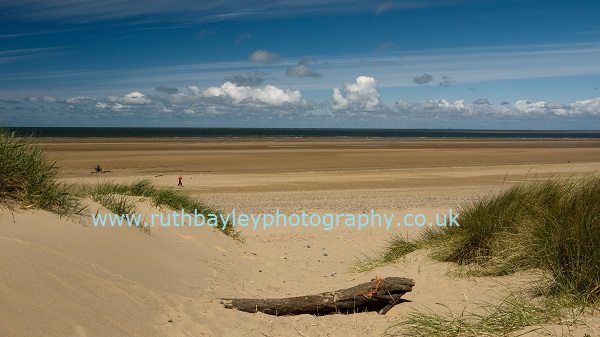
You know that feeling of love, when there’s a real connection between you and the place you’ve just discovered, and even though there are other people there, you feel like you’re the only one that’s discovered this beautiful place that has so much and just really does it for you.

I’ve come across about three places like this, where my breath has just been taken away by what I see and feel. One is Capri in Italy, when I walked down a road that’s not often used by tourists. I walked down a road and got an unusual view of the Faraglioni rocks, as the limestone rocks rise out of the sea, and I instantly fell in love. The other is a beautiful little village not far from me that I’m going to be using for my Healing with Photography courses.

That too, the first time that I came across it there was an instant connection and it just took my breath away. Not only that, like this location that I found this week, it has everything that can take you through the seasons with lots of interest and locations within the village. Read More→

A Photographer’s Diary, Springtime is Arriving

I love this time of year, the spring bulbs are all coming into flower, the grass is starting to grow again and the blossom starts to bloom on the trees. It does create a divided call on my time, between choosing to stay and work inside on courses and contacting companies, or nipping out when the sun is out to take some photos of the joys of spring.

Of course there isn’t really a decision to make; if I have the time I grab hold of my camera and head off to the countryside to take lots of photos. This last weekend I went back to a location I discovered last summer. I really just went back to explore it and make sure it was as beautiful as I remembered.

Whip Crack Away

Read More→

Scenic Outlook – The Early Bird

It’s 4:30am and my alarm clock has just gone off, it’s still dark out but as I look out of the window I can see both cloud and starlight. This could potentially be a good morning for photography. I had already planned for a trip out today so everything was already packed up and ready to go. All I had to do was drag myself out of bed, throw on some clothes, grab my gear, get in the car and go.

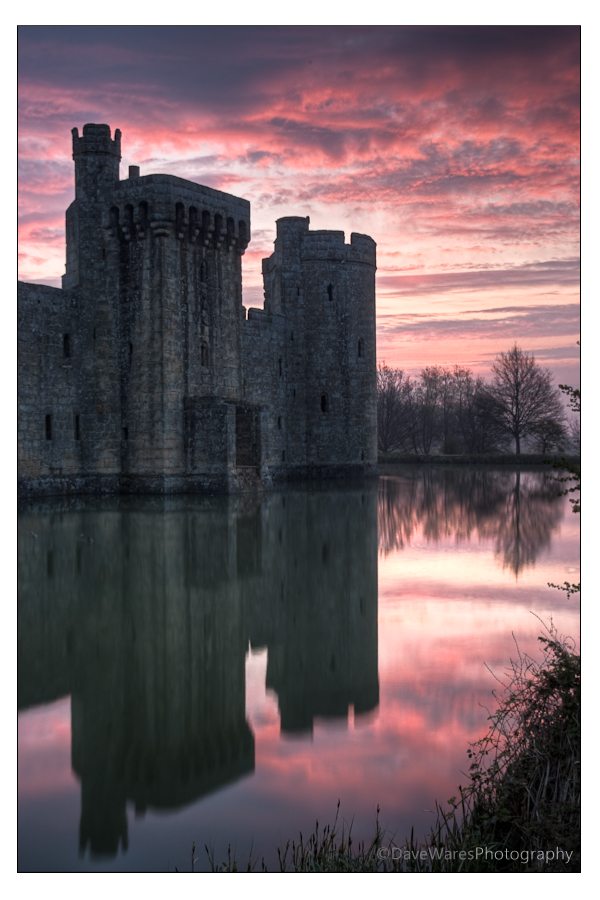
For today’s shoot I had planned to go to Bodiam Castle, not a half hours drive from my house I knew that I could get there well before sunrise. When I arrived it was still pitch black and the gates to the car park were closed. No worries, I just parked in front of the gates. I would be at home with coffee and breakfast by the time staff arrived to open up. With my hat and gloves on, I grabbed my gear and set off up the path towards the castle.

Read More→

Scenic Outlook – Look for Details

We all love going out with our wide angle lenses to try and capture the vast landscapes we see before us. The hills and valleys, a vast lake or golden sandy beaches with blue skies and fluffy clouds; it is these kinds of things that capture our imaginations. But landscape photography is much more than just this, it is about seeing things within the landscape, looking for objects, patterns and colour that you could pick out and show off. Sometimes this can referred to as ‘Macro landscapes’, but it doesn’t necessarily mean taking shot with a macro lens. All three examples you see here were taken using a 18-50mm focal range but any focal length could be used depending on the situation you’re in. Telephoto lenses are great for picking out things in the distance, but they can also be great for close-up photography as well if you don’t have a dedicated macro lens.

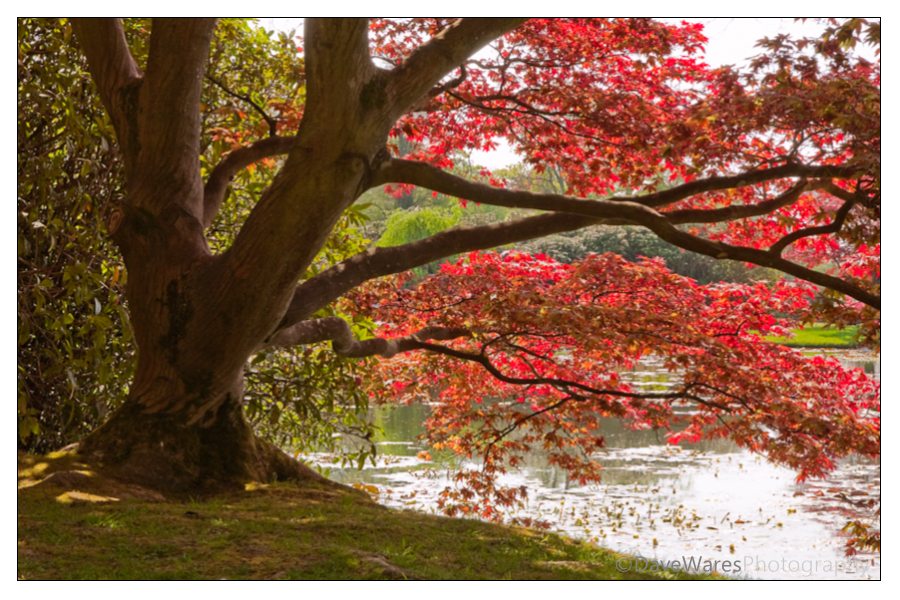
You could choose something straight forward such as focusing on one particular tree to show off it’s branches and foliage. Read More→

Scenic Outlook – Balancing the Scene Part 1: Graduated Filters

As a landscape photographer one of the big difficulties you’ll face will be trying to achieve a balance between the land and the sky. During normal daytime hours this won’t be an issue but as we know the best times to be out is during the golden hours either end of the day. At these times the sky will be much brighter than the land and although our eyes adjust pretty well to this kind of scenario our cameras just won’t be able to cope with the huge difference in contrast. This means you will have to compromise by either metering mainly for the sky which would result in a dark landmass, or metering for the land which would more than likely result in over exposing the sky. To overcome this there are a few ways in which we can tackle this problem and the one we are going to look at today is by the use of filtration.

Read More→

Scenic Outlook – Getting the White Balance

Over the past few months I have read a number of online articles giving advice on how to achieve a ‘proper’ or ‘correct’ white balance, some of them from reputable sources. They go on to explain how to get a so called ‘proper’ white balance by the use of things like a grey or white card which should be set at the start of a shoot by using the preset white balance function on your camera. The trouble is that this advice by itself can be a little misleading and they should really qualify their posts by stating, ‘This is how to set a neutral white balance for use in certain shooting situations ‘. A neutral white balance will render white objects white, eliminating colour casts from various light sources, such as a table lamp for example. These situations will include things such as product photography, portraiture, record nature photography etc., and the way to achieve this is simply to place a grey card in front of your subject and select the preset white balance option on your camera, it will then prompt you to take a shot to measure the colour temperature of the light thus setting a neutral white balance.

For scenic and pictorial nature photography it is not always necessary to set your white balance in this way. We can use our white balance for more artistic purposes.

What we can do as scenic photographers is to learn to use the various white balance settings in a more creative manor, which will help to bring added mood to your pictures. The various options may include Daylight, Cloudy, Shade, Tungsten and Fluorescent which are set at various colour temperatures ranging from yellow through to blue. (On a side note there is also a green though magenta shift referred to as ‘tint’, and can be found in various RAW conversion software programs. Any noticeable casts in these colours can be altered here.) There will also be an Auto white balance option and on some high end models there will also be an option to set a specific colour temperature, measured in Kelvin. While the Auto option can be great in some situations, its main purpose is to automatically adjust and remove what it thinks to be a colour cast. For us as landscape photographers the Auto WB can be a pain and I would recommend that you don’t bother with it. The camera doesn’t know the sun is casting a lovely golden light across the landscape, instead it sees the yellow as a problem and tries to remove it by adding more blue. Read More→