Archive for Tips – Page 8

10 Quick Ways to Increase Your Wedding Revenue

Ah wedding photography! A goldmine or business land mine?

However you feel it’s going with your wedding photography business the chances are it could be doing a little better……. am I wrong? Here are 10 quick ways you can increase your wedding revenue.

  1. Work out your value and charge day rate for your time……nothing else….. just your time… everything else comes later!
  2. Make sure you’re product costs are not higher than 20%
  3. If you must offer ‘shoot to burn’ then why not consider per image pricing.
  4. Sell storybooks using per page pricing.
  5. Pre-design (or get someone to do it for you) pages of your clients storybook. Let them eliminate the pages they don’t want….. it’s the opposite of up-selling!
  6. Don’t worry about offering packages but instead introduce a minimum product credit spend to be paid upfront. Read More→

Finding Your Feet: Getting Started in Photography: by Jacob Lucas

Many people ask me how I got started in photography as well as why I got started. The answer to both is that I’m a very visual person. It’s just my nature. The scale doesn’t matter either – it could be as simple as a bumblebee on a flower during a warm spring day, or a vibrant sunset panning across the ocean for hundreds of miles.

I picked up a camera because I was moved by these scenes and wanted to capture them as I saw them. During the time of my life when I moved from Australia to Seattle my surroundings changed so incredibly that something compelled me to photograph it all. Seattle is my muse and I love her for it – it’s changed my life for the better on many different levels. In short, the pacific north-west and Seattle is both how and why I became a photographer.

Seattle

This is the first post in a series of fortnightly posts on how to get started in photography which I’m calling “Finding Your Feet”. I intend the series to be impartial and gear-agnostic; hopefully what I have learned since I picked up a camera and recall throughout the series will help you too. It’s not going to sell you on a particular model of SLR camera or anything at all like that; it’s to help you find your own muse so that you too will want to take photographs and learn all about photography. I really think that is the key here… and it’s something completely intangible which a lot of people find troubling because how does one learn to want something? It doesn’t need to be a drastic life changing event… it can be something small like the first snow of winter, or a family vacation. Be cognisant of something that makes you step back in awe and say to yourself, I want to photograph this; and run with it. Read More→

How To Alter Colors During a Photo Shoot: by Guy Van Hooveld

My experience with corporate shoots is that sometimes, the environment is not exactly like the customer has described it, or does not really provides the kind of colors or light allowing to deliver the message you need. That is the reason why I use equipment to modify the look of a specific scene during the photo shoot. Some coloring is of course always possible in post production, but I am not a Photoshop freak, and I prefer to get the results right the first time, and to minimize post production.

First Example

This example was a shooting session in a control center. A few pictures were expected for a press file, showing the “hi-tech” look of the dispatching center. When I arrived on location, I was impressed by the “clean” aspect of the room, a bit like a hospital. I decided to use color filters on strobes to give a more dramatic aspect to the pictures. After some tests I decided to go for dark blue, to give a “night” impression.

Let’s just follow the different steps:

Just for information, the used equipment was:

  • Nikon D3 camera with 24-70 2.8 lens on a tripod with hydrostatic head
  • Radio controlled shutter
  • Radio controlled strobes
  • 600Ws Strobes with color filter and barn doors, with digital energy selection
  • Lightmeter to determine exposure

A first picture to show the environment as it was

Read More→

15 Ways to Increase Your Portrait Revenue

Here’s a few ideas that will actually increase your portrait revenue…. trust me these are tried and tested in the height of a recession! It’s not about the hard sell but you do need to be able to say no once and a while.

Portrait Photography

  1. Always charge a shoot fee. Even if you give it back as product credit you’ll still have the client financially committed.
  2. Raise your prices and throw away your old price lists. Don’t be tempted to offer old clients old prices. That was the old you…… you’re more experienced, spent lots more on bettering yourself and your product…… your prices should reflect that.
  3. PROJECT! If you can’t show your work on a 60 inch plasma then use a projector. The bigger you show it, the bigger they’ll want it!
  4. Don’t do viewing online…….. ever! That’s just lazy and you know it! Read More→

HDR Best Practices Guide – Part II: Image Management

So, you finished reading ‘HDR Best Practices Guide – Part I: In The Field’, and went out for a shoot. You had all of your wits and your gear about you when you set up your tripod and fired off those lovely brackets. You’ve got the raw materials (fine, pun partially intended) and now it’s time to refine them into something truly beautiful.

My original intent for Part II of this HDR Best Practices Guide was to delve into the actual tone-mapping and post processing steps around HDR. But, I felt that I would totally be glossing over an extremely important part of the whole HDR photography lifecycle by ignoring Image Management. So, I decided to devote Part II of this Guide to this topic because a clean home is a happy home. Part III will nose dive into the goodness of Photomatix, Photoshop, and everything in between.

I could write a whole book on the importance of image management. Many people already have. Your images are your primary, precious  resources. As such, they have to be properly cataloged and inventoried so that you know exactly what you are looking for, how to find it, and how to deal with it. Image Management is critical when you’re simply dealing with single images. Imagine what happens when you’re dealing with several brackets per HDR image. Here are some ‘Best Practices’ that I religiously follow to help prevent myself from losing sanity over my  abyss of brackets.

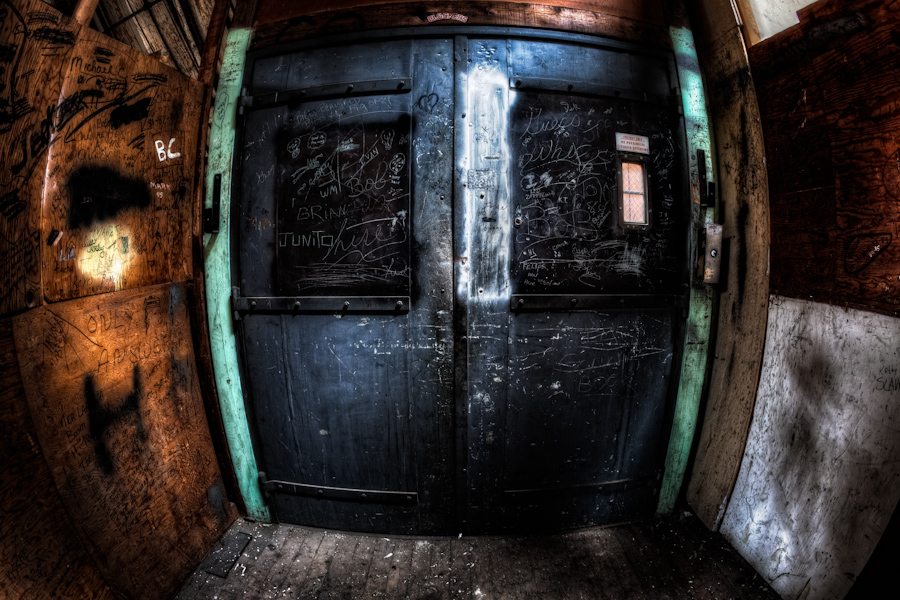
Canon EOS 5D Mark II, Canon EF 15mm f/2.8 Fisheye, 15mm, F 5.6, ISO 100, HDR, 9 Exposures – Click on image to enlarge

Read More→

16 Quick Tips to Help Keep Positive in a Down Economy

Times are though for everyone. People are losing their jobs left and right and unemployment is at its highest level. Businesses both large and small are struggling to stay alive. When money gets tight it can be vary hard to keep a positive attitude. Negativity leads to depression, and depression makes it very difficult to move forward in life.

Change

I recently lost my full time job after 17 years with the same company. It was due to the economy, our clients were cutting back on their marketing budgets and only doing the minimum required to continue sales. Almost all the creative work we were doing dried up and trying to find new clients became harder and harder. I saw the writing on the wall and had been preparing for the inevitable for a while. I updated my resume and portfolio, started networking more, and lined up some freelance customers. Read More→