Archive for Canon

Canon Announces the 5D Mark IV DSLR Camera

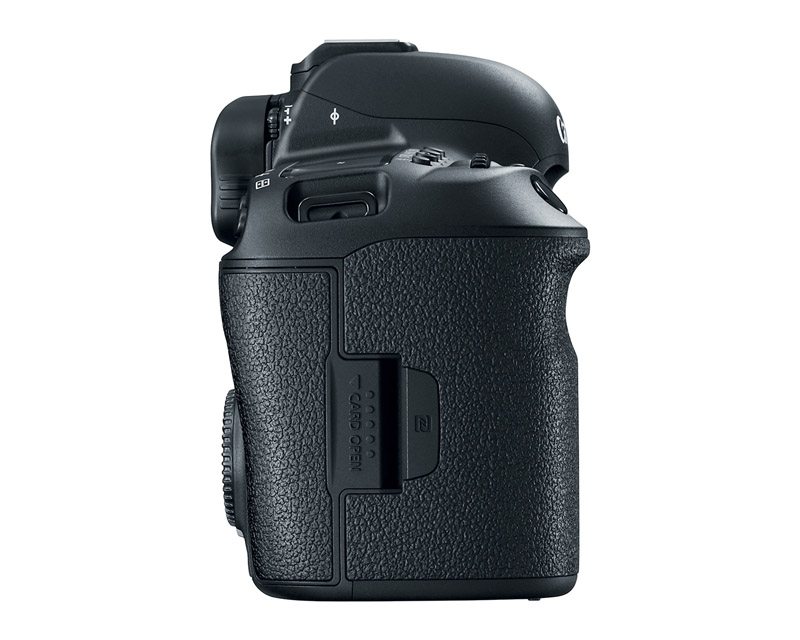
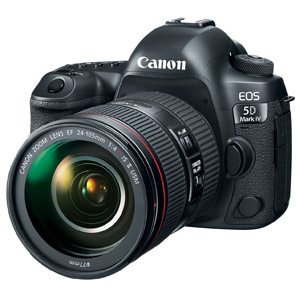
Canon-5DMK4-300x300The highly anticipated Canon EOS 5D Mark IV has officially been announced. There were a lot of rumored specs circulating for weeks leading up to the announcement, but the wait is over.

While the 5D series is not Canon’s top of the line DSLR body, it is the most popular among professional wedding, portrait, and nature/wildlife photographers. With the introduction of full HD 1080p video recording in the 5D Mark II model, it made Canon’s pro-sumer DSLR hugely popular among budding and professional film makers alike. This camera was the first notable DSLR body to include video recording and was the pioneer in fusion photography.

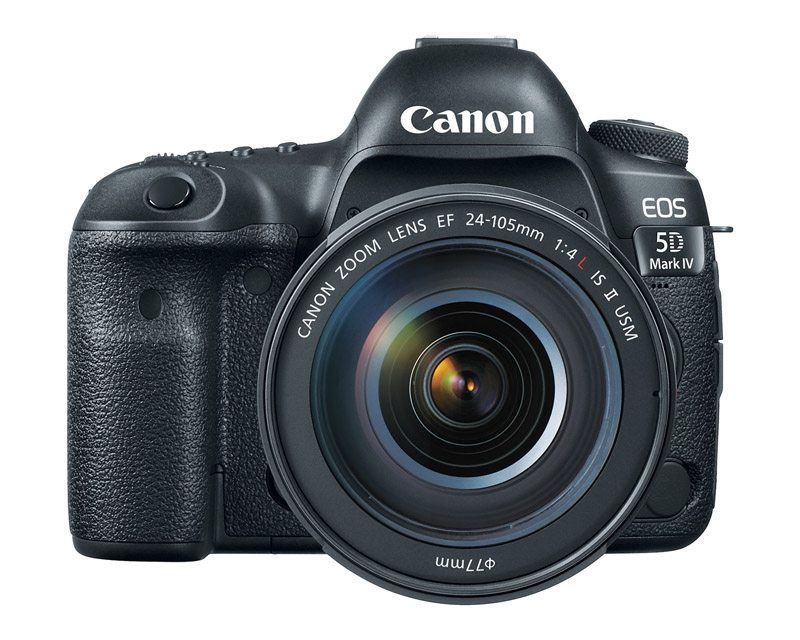
The 5D Mark IV takes video to the next level with 4K 30p and 24p recording capabilities. It will also pull 4K 8.8 MP still images from a video segment, a technique many fusion photographers have adopted to capture the perfect moment. To make video shooting even easier, the camera features Canon’s propriety Dual Pixel CMOS AF, even when shooting 4K to help ensure sharp focus and subject tracking.

The 30.4 MP Full Frame CMOS sensor offers stunning image quality in nearly any light, with ISO range 100-32,000; expandable up to 50-102,400. The DIGIC 6+ Image Processor delivers up to 7 fps continuous shooting.

The 61 AF points with 41 cross-points is a welcomed addition to the 5D line, and the 150,000-pixel RGB+IR metering sensor helps provide precise exposure metering, helps detect flickering lights and allows for enhanced scene recognition and face detection capabilities.

For the first time in the 5D series, the Mark IV features built-in Wi-Fi and Near-Field Communication (NFC) providing an easy way to transfer images and MP4 movies to compatible mobile devices, as well remote shooting when using the Canon Camera Connect App. The EOS 5D Mark IV also includes a built-in GPS receiver with compass for precise geo-tagged information of latitude, longitude, and elevation. These features have been available in other DSLR models for some time, but the only way to have them in a 5D model was through the use of an external device.

Pricing and Availability
The Canon EOS 5D Mark IV DSLR is scheduled to be available in early September 2016 for a retail price of $3,499.00 for the body only.

It will also be sold as part of body-and-lens kits with the EF24-70mm f/4L lens for $4,399.00 and the EF24-105mm f/4L IS II USM lens for $4,599.00, scheduled to be available late October.

For more detailed information, please visit Canon’s 5D Mark IV product page.

Canon Lenses and Accessories Announced with the 5D Mark IV Introduction

Canon-5DMK4-Accs-300x300In addition to the new EOS 5D Mark IV DSLR, Canon also introduced two EF-Series L-series lenses as well as a variety of EOS accessories. The new EF 16-35mm f/2.8L III USM Ultra-Wide Zoom Lens features a large diameter GMO dual surface aspherical lens and ground aspherical lens, f/2.8 aperture throughout the entire zoom range, fluorine coating, improved durability and is dust and water resistant. The new EF 24-105mm f/4L IS II USM Standard Zoom lens features an improved four-stop image stabilization as well as ghosting and flare reduction with air sphere coating. Read More→

Magic Lantern – Behind My Eyes

Being a fan of High Dynamic Range (HDR) Photography, I’ve become very intimate with the Auto Exposure Bracketing (AEB) function on my Canon camera. What I’ve come to realize is that obtaining the entire tonal range of an image at 1 EV increments can be difficult if your AEB settings will only allow 3 exposures to be produced. Sometimes -2, 0 and +2 are just not enough. If you have an extra $300+, you could purchase a Promote Control which offers amazing bracketing controls, but it’s hard to justify that kind of purchase for some of us.

Then, there’s Magic Lantern. It’s a third party software for Canon cameras (sorry Nikon) that sits on top of the camera’s firmware and adds awesome flexibility to DSLR video shooting, but also gives up to exposures for HDR bracketing and a cool Autodetect feature that takes some of the guesswork out of bracketing. I’ve been flirting with downloading the product onto my 60D for some time, but finally pulled the trigger a couple of weeks ago. The video below will take you through the options for bracketing on the 60D prior to having Magic Lantern, then will show how things have changed with it. Take a look.

Read More→

Top Compact Cameras for ‘Capturing the Light’

Improving camera technology is making photographers out of everyone. Truly inspiring images need three things: interesting subject matter, clever composition and creative lighting. Although the first one is subjective and the second one can be learned – based on the rule of thirds – the final one is much harder to learn and used to take years of practice to master. Until now.

Even small, compact and affordable point-and-shoot compact cameras can deliver outstanding photographs that are well lit no matter how tricky the lighting situation. Seeing as photography is about catching the light, if you get the lighting sorted, the rest should fall into place. Here are two compact cameras that can help you capture the light – controlled using exposure – no matter how much or little there is available.

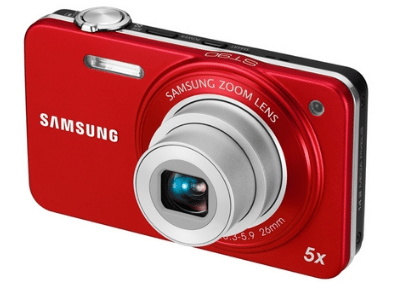
Under £100: Samsung ST90

At just £59.95, the Samsung ST90 is the best camera from Curry’s for controlling the light with minimum fuss and maximum ease. This 14.2 megapixel camera, with 5x optical zoon and HD video function, works on ISO settings from 80 – for bright daylight – through to 3200 – perfect for capturing low-light images. Additionally you can have some control over the shutter speed yourself, allowing you to blur of freeze images no matter what the light is doing. Plus, if you’re not all that aux fait this camera comes with a whole host of pre-set exposure models from sunset and fireworks to daw and night portrait. There are some fun effects to try to such as fish eye, retro and negative.

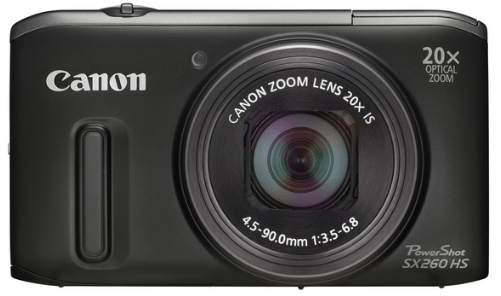
Over £300: Canon PowerShot SX260 HS

Canon is one of the best camera manufacturers in the world. They know a thing or two about lenses and exposure technology so you can expect a high quality camera. As far as compacts go, the PowerShot SX260 HS is one of the best camera models available from Canon.

This camera comes with 12.1 megapixels and 20x optical zoom. Optical zoom rather than digital zoom offers a clearer picture that can be increased in size without loosing significant detail. It also has full HD video of 1080p resolution quality. Its ISO positions run from 100 through to 3200 and the shutter speeds work from a minimum of one through to 1/3200th of a second.

You have plenty of other ways of controlling the light too. There are eight white balance settings, enabling you to match your camera’s settings with the type of light conditions you are photographing under, including tungsten, fluorescent and daylight. There are dozens of exposure modes to choose from including underwater and snow and you have a wide choice of effects too. This camera represents great value for money and is of a very high quality. You can get more information and reviews on the best camera models from What Digital Camera.

–

Sigma 50-150mm F2.8 Lens Now Available

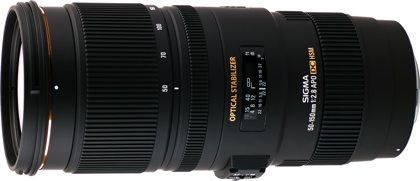
SIGMA LogoApril 4, 2012 – PRESS SUMMARY – Sigma Corporation of America, is pleased to announce that its newly upgraded 50-150mm F2.8 APO EX DC OS HSM telephoto lens is now available for the street price of $1,099.

The 50-150mm F2.8 APO EX DC OS HSM telephoto lens is the successor to the 50-150mm F2.8 APO EX DC II HSM. The updated lens now features Sigma’s own proprietary Optical Stabilizer (OS) technology, which offers the use of shutter speeds approximately four stops slower than would otherwise be possible. The lens design utilizes an inner-focusing and inner-zooming system that provides convenient handling and this, along with the OS feature, makes it favorable for high-performance, handheld, close-up photography. Additionally, the Hyper Sonic Motor (HSM) ensures quiet and high-speed auto focusing, while allowing full-time manual focus capability.

The Sigma 50-150mm F2.8 APO EX DC OS HSM Canon mounts will be available next week, while the Nikon and Sigma mounts are expected to be available by the end of April. Read More→

Get $25 Off PocketWizard ControlTL for Canon and Nikon

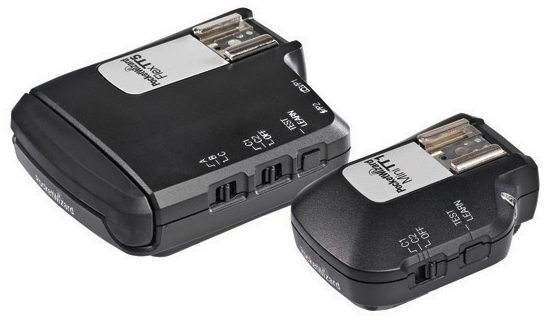
April 2, 2012 – PRESS SUMMARY – MAC Group, a leading manufacturer and distributor of professional photographic equipment, announces today a $25 mail-in rebate for U.S. customers that purchase a new PocketWizard MiniTT1 and/or FlexTT5 radio for use with Canon or Nikon DSLR camera systems from April 1, 2012 to May 31, 2012. Via mail-in rebate, purchasers will receive $25 for each unit purchased from an Authorized PocketWizard Dealer in the U.S.

“MAC Group, PocketWizard’s USA distributor, is happy to provide Canon and Nikon shooters in the U.S. with a special opportunity to experience the amazing capabilities of PocketWizard ControlTL radios,” said Phil Bradon, MAC Group’s PocketWizard Marketing Manager. “This limited time $25 rebate is available on every MiniTT1 or FlexTT5 for Canon and Nikon purchased. ControlTL is the perfect complement and a must-have accessory to Canon and Nikon digital SLR systems, providing amazing flash and camera triggering capabilities.”

For more information on this rebate visit: http://www.pocketwizard.com/25rebate

About MiniTT1 and FlexTT5

The PocketWizard MiniTT1 Transmitter and FlexTT5 Transceiver for Canon and Nikon DSLR camera systems allow photographers to enjoy the ease of TTL exposure automation with the simplicity of PocketWizard’s ControlTL™ system. These TTL capable radio slaves make taking off-camera flash as effortless as slide-in, turn-on and shoot.

Combining TTL automation with the reliability of PocketWizard radio technology results in perfect off-camera flash photography in any environment – around corners, out-of-sight and even outdoors in bright sunlight. The MiniTT1 Transmitter and FlexTT5 Transceiver can be used to control single or multiple off-camera TTL flash units

and provide unique features such as HyperSync, which allows photographers to go beyond their normal x-sync speed. Thanks to upgradeable firmware, these units will remain current even as camera technology changes.

–