Author Archive for Guest – Page 10

Getting Ready to Fly… Should You Ship Your Camera Gear Ahead or Check it? by Charlie MacPherson

It’s no secret that travel is becoming increasingly difficult. Airports haven’t been much fun for the last 20 years or so anyway. But with the increased security following 9/11 and the more recent attempted shoe and underwear bombers, air travel has easily become the most unpleasant part of any trip.

But normally, the best photography sites in the country are not in our back yards. That means travel – often, by air.

So that raises a question.

Should you trust thousands of dollars in camera gear to the tender mercies of the TSA and airline baggage handlers? Or should you ship your gear ahead of you?

There are pros and cons to either. But first, some full disclosure. In addition to my work as a photographer, I own a retail shipping store (similar to a UPS Store) called Postal Center USA in Randolph, MA.

Not that I expect photographers to flock to me to ship camera gear, but I think it’s worth being up-front. It also means that I can speak with some real expertise on the matter.

First, if you can safely carry your gear on board the aircraft, that’s the best option. Your gear stays within your control (except during the TSA “experience”). But my advice is to select seats in the back of the aircraft so you can board earlier. And place your gear in an overhead bin *in front* of you so you can see it.

Check with the airline. Ask what type of aircraft will be used and what the maximum dimensions in the overhead bins are. The only caution is that the aircraft type can change at the last minute.

If you suddenly find yourself unable to use the overhead bins for any reason, politely insist that you “gate check” your gear due to fragility and high cost. That means that you hand it to the baggage handler at the gate, and they bring it back to you at the jetway. There’s a lot less handling that way.

But if you’re like me and have too much gear to fit in that overhead bin, consider shipping it with FedEx or UPS. You can do this safely if you follow a few precautions:

1. Be sure your gear is insured. Check with your homeowner’s or renter’s insurance. And a note of caution – if you shoot anything for pay, these policies will not cover you. In any case, contact your insurance broker and ask about an “inland marine policy”, which covers for replacement value – not depreciated value. I buy mine through PPA (www.ppa.com)

2. Record the model and serial numbers of every piece of gear – just in case.

3. Be sure you have a reputable place to receive your gear. A national chain hotel should be OK. I’d be cautious about one that doesn’t have a big company name behind it. A Hampton Inn is fine. Joe’s Bedbugs & Breakfast Motor Lodge? Not so much.

Consider contacting a shipping store to see whether they will receive and store your gear for a small fee.

4. Ship your gear with either FedEx or UPS so that it arrives at least one business day early. Just in case. And track the shipment early in the process for the best chance of catching any problems.

But unless you have big stacks of money to burn, leave yourself enough lead time so that you can ship via ground. Air shipping gets a lot more expensive!

5. Padlock your bags – even a small padlock through the zipper handles is a deterrent.

I find that even without my “storeowner’s discount”, the cost is well worth it.

I don’t pay for the additional checked bags, I don’t have to carry them, and I even ship my clothing so I can breeze through the airport.

One last hint – remember to carry your GPS with you. If you ship it ahead in your luggage and need directions to find it, well…just remember to keep it with you!

Follow these precautions and enjoy your next flight a lot more. Shipping your gear ahead makes the whole airport experience a lot less stressful, and that’s a luxury well worth paying for.


–
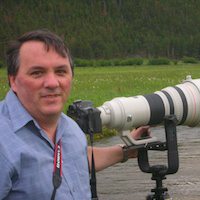
Charlie MacPhersonCharles MacPherson is an award-winning wildlife photographer and resident of Scituate, Massachusetts.

He has been behind a camera since 1973 when shortly after picking up his Dad’s “Argus Brick”, he was inspired to buy his first SLR – a Canon TLb.

His decades-long love affair with photography morphed into an obsession with wildlife photography and a specialty in birds.

He conducts photo-tours around the country as well as workshops and classes in the Boston area and writes two weekly blogs: www.TheAmazingImage.com which covers general photography topics and www.TheWildInFocus.com, focused on wildlife photography and is a blogger for B&H Photo.
Company: The Amazing Image
Phone:
781-470-9111
Email: charlie@TheAmazingImage.com
Twitter: @TheAmazingImage
Facebook:
https://www.facebook.com/charlie.macpherson.1

Photo Credit: © Charles MacPherson

Here’s how you can share your tips, techniques and tutorials on CurrentPhotographer.com

–

Remember, Your Clients Are Reading… by Tracey Brown

With the onset of Facebook, Twitter and blogs, we have to keep in mind that everything we post as photographers WILL BE READ. Over time I have noticed that with these outlets it is so easy to get too comfortable with what we put out there. Regardless of our true feelings about any situation especially when it comes to clients, both past, current and potential, we must always come across as positive.

Case in point, I had a wedding that I was so looking forward to as it was an out of town location with great scenery. I was particularly looking forward to capturing some shots with my clients at some of the local attractions. But the entire day was a complete wash out and I pretty much ended up with nothing. Truth be told, the day was a wreck. My hair got wet, a guest knocked my Lightsphere off of my flash in the rush to get out of the rain and the videographer was a total nuisance! Read More→

Making your first HD DSLR Video – Part II – Must-have equipment

In the first part of this series, I covered some places that you could learn some of the fundamentals that you’ll need to shoot video. Now, we’re on to the equipment. The assumption I’m using is that you have a camera body that shoots video and a lens – that’s it. Now, what do you REALLY have to have to improve that basic platform, and what is the BASIC equipment you need to buy. Not the fanciest, most expensive equipment, but what do you REALLY need? The next thing I’m going to consider is – what can you buy that will have a dual purpose – another words, can you use it for stills AND video?

First, everyone ALWAYS starts with a tripod. Let’s face it, you can spend every bit of money you have on one and not get anything else. One clear thing you don’t want to do, is buy a $79 one at Best Buy. It will not cut it for stills OR video. There seems to be two main differences between a stills and video tripod. First, is the weight. If you look on B&H and just search for tripods, you can spend the better part of a day reading about all of them. I was lucky…I had invested in a nice Manfrotto tripod with a ball head many years ago. One of the great things about investing in a GOOD tripod and head up front is that you’ll really never have to replace it. However, in my case, I was very fortunate because that ball head could be replaced with a fluid head for shooting video. Read More→

It’s Not the Size of Your Following That Matters, It’s How You Use It: by Chris Horner

There’s a common misconception in social media that the more followers or likes you have, the more influential you are or the higher your chances of making a bazillion dollars online with little to no work. There seems to be a race to get the most followers and likes with little or no thought to the endgame. Oftentimes people think that if they have a million followers that a million people are looking at their work and that will automatically lead to sales.

Well, no. Unfortunately it doesn’t quite work that way.

In this article, I’m going to look at Twitter and Facebook pages as they might be used for a business, and share some insights into growing an online community that has value.

First, as with any new endeavor, decide what your goals are. Why do you want to use social media? To keep in touch with customers and prospects? To network with peers? Answering these questions will help you determine the crowd that you want to attract. Read More→

One Light Wonder for Children Portraits: by Daryl Brown

Photographing children can be challenging let alone getting them to sit still for the session. So for me as I’m sure many other portrait photographers, I keep the process simple. I use one large soft box with a strobe and I let the kids be kids. To me thats the true image most parents want unless they are trying to get model agency representation. When I have a child portrait session, I do my best to not have things around that would distract them and I also tidy up the cords and other miscellaneous gear to avoid accidents because we all know kids are adventurous. Its always good to know ahead of time exactly what the clients want as far as background and or location. Most of my clients so far just wanted either a white, dark gray or sometimes black background. That seems to be the standard so my advice  is to keep a roll of each around and present them with options, they’ll appreciate that more. Once you know what type of image the client wants thats where my simple one light setup can come in handy. Read More→

Making your first HD DSLR Video – Part I – Training

One of the things you have to consider when attempting to create your first HD DSLR video is knowledge. What do you need to know and where can I find that knowledge? Well, to summarize why I’m even asking, let me give you the premise for this series.

It’s been more than two years now since the release of the Canon 5D Mark II and Vincent Laforet’s film Reverie, which really blew everyone’s doors off. For some, the camera was the greatest thing to hit their lives and they ran with it. This series is for the rest of us who bought these cameras and did little if anything with their film-making capabilities.

I know that I had all these grand ideas about what I would shoot when I just figured out how to use it. The more people I interviewed about it for the LensFlare 35 podcasts, the more daunting it became for me personally. I quickly found out that all the settings I had used to capture those first video segments were ‘wrong’. Then, I started hearing about all this extra gear I needed just to shoot video, THEN it was the fact that I needed assistants, had to change out the type of lighting I owned, had to ‘think’ like a film-maker and storyboard everything out first; I needed a more powerful computer AND expensive software to edit it and…did I mention audio? How important it is to have the correct gear, how to record it, how to sync, it, and on and on. Read More→