Author Archive for Guest – Page 9

Scenic Outlook – Get Low

Adding interest is our number one goal in making any image, especially of landscapes. The inherent challenge in shooting landscapes is that other than weather and time of day, land is static and images can become redundant. What we’re going to take a look at today is a fairly simple tip but one that is often overlooked; getting low. Vantage point can do wonders for your images and it goes beyond a simple line of sight. We can add impact with foreground elements, alter depth of field in an interesting way, and catch the sun at a completely different angle. This is an exercise I have beaten into my own head until it became second nature and has produced some valuable results.

While photographing this sunset in Maui, I climbed down these rocks almost to the edge. If I made this image where most people were standing it would have been pedestrian. Getting down low afforded me the luxury of using a filter to slow down the shutter speed and catch water pouring over the rocks.
Read More→

Building Your Photography Business With Multi-Source Marketing: by Larry Lourcey

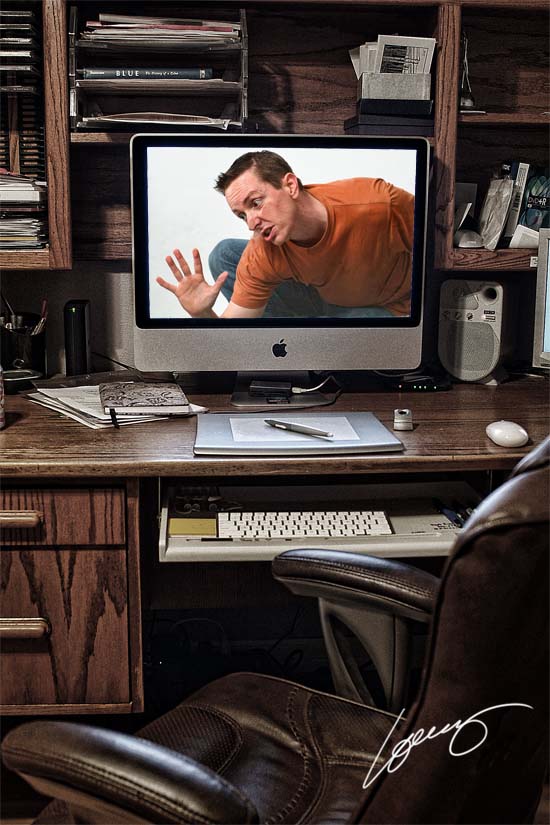
Larry Lourcey - TrappedA photography studio, like any business, can’t survive without clients. You can be the best photographer in the world, but if nobody knows about you, the studio will fail. There is a reason why the term “starving artist” has been around for so long!

In the past, it was just a matter of putting an ad in the Yellow Pages, then sitting back and waiting for the phone to ring. Unfortunately, those days are gone. People are flooded with information every day. The last thing they are going to do is try and seek you out in the phone book. Think about it… if your plumbing breaks, what are you going to do? Its unlikely that you will run for the phone book or sift through last week’s mail looking for a promo postcard from a plumbing company. You will either call a friend or hit Google and search for a local plumber.

To stay competitive today, you’ve got to change your thinking. Stop looking for the Home Run and concentrate on getting Base Hits. What I mean by that is to focus on finding several places that will send you a few new clients – vs looking for one source that will send you tons of clients. Read More→

Saving Valuable Negatives: by Dominic Lee, AMPA

My wife tracked down and phoned the now retired photographer who shot her parent’s wedding and asked him if she could buy copies of the wedding photos. He barked out that he had dumped the negatives when he retired and put the phone down. It was clear from his reaction that this was not the first such request he had received. Was that an air of regret in his voice, did he realize that he could have charged the same price for 1(10×8) photo in 2011 as he received for the entire wedding album back in the 50’s? We will never know, and neither will he because he was foolish enough to dump the negatives.

Of course it’s a momentous task keeping all those files in a state of preservation and in a filing system which would allow you to retrieve them. And realistically the money you get for the odd copy you sell to some deceased relative is not worth the effort. But keeping the negatives or digital files could be of great value historically. Portraits of children making their First Holy Communion; judging from the fact that 80% of those attending Mass nowadays are OAP’s it wont be long before First Holy Communion photographs become as rare as hens teeth.

I used to photograph 4 or 5 Priests getting Ordained every year. I even photographed a Nuns Profession. I bet there isn’t a photographer under 40 who has been asked to cover any of those. So even photographs with Priests or Nuns in them will have an historic value in the not too distant future. Read More→

Scenic Outlook – Shoot for the Clouds

“What a beautiful day, not a cloud in the sky!” To most people this phrase means good things, but when I have my camera in hand, it’s actually just the opposite.  As landscape photographers, there are many elements of a scene we look for when composing a shot. Typically the first things we analyze when shooting a landscape are the foreground and background elements, but often times we overlook what’s above our heads. It’s easy to dismiss clouds as another piece to your landscape puzzle, but if you pay special attention to the fluffy white stuff, your images can take that next step. I’m going to touch on why you should start paying more attention to clouds and break down some techniques on making them work for you.

Blue is boring
Start thinking of landscape images with three equally weighted segments: foreground, background and sky. Your goal should be to have each segment of the frame adding interest to your image. As your viewer’s eye travels up or down the photograph, don’t let it stop abruptly with a featureless blue sky. Sure, sometimes there’s nothing you can do about it (ie, you’re on vacation), but when shooting near your home, get that camera out when the sky has some character. It’s perfectly fine returning to a favorite spot or capturing the same scene more than once. Adding clouds to a previously similar image can dramatically improve your shot.

I’ve headed back to this same spot at my local beach multiple times. I was rewarded during my last visit with an impressive cloud filled sky which put previous boring sky shots to shame.

Read More→

Creating Abstract Impressions: by Anne McKinnell

Impressionist painters were more concerned with colour than line. Their goal was to leave the viewer with an impression of the scene rather than a literal depiction and their works often included a sense of movement.

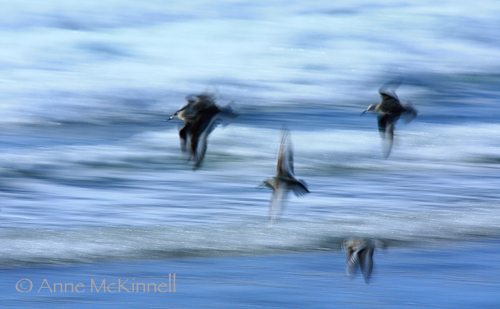
Photographers can also create emotional abstracts that leave only an impression of the original subject by using a slow shutter speed, from 1/50 of a second to 1/2 second, and moving the camera while the shutter is open or allowing a moving subject to pass in front of the camera.

This technique is fun because every frame turns out different. An afternoon can easily slip by as if moving on the waves of colour. There are 3 ways of approaching this technique:

1. Pan with a moving subject
When you move the camera while the shutter is open, it is called panning. With a moving subject, you want to pan at the right speed to keep the subject in the frame. Panning on a moving subject with a very slow shutter speed has a drastically different result than panning with a faster shutter speed. A faster shutter will have more sharpness in the subject and show some blur in the background. A very slow shutter speed is more abstract and allows you to really feel the movement while retaining just enough detail in the subject that you can still tell what it is.

1/50 Second, f/18, ISO 100

Read More→

The One Skill That Will Supercharge Your Business: by Chris Horner

Most people dislike the sales process. They think they have to be slick, maybe they have to ‘trick’ people with a crafty ‘close’, or that they have to talk a mile a minute until their prospect gives in.

None of that is true.

There is, however, one skill in particular that if mastered will propel your business forward faster than anything else. Best of all it works whether you’re speaking to someone directly or you’re letting the copy on your website or brochure do the talking: understanding and being able to explain the difference between a feature and a benefit.

A feature is simply a line item. It’s something about your product. A benefit tells someone what they will get out of it. A benefit paints a picture.

Take the Nikon D7000 camera for example. Which description sounds more interesting?

The Nikon D7000 features a 16.2mp sensor.

Or

The Nikon D7000 features a 16.2mp sensor, 25% larger than its predecessor for unparalleled detail resolution and ability to capture subtle highlights. Read More→