Archive for Tips – Page 3

Starting a Photography Business: Part 10 – It’s Just the Little Things

In the last few weeks lots of little yet important questions have come up as regards the site. Mainly what mood and ethos should the site take, what should it say? I guess by now you know me well enough to know that I’m a heart on my sleeve kind of person and that I am quite happy to wax lyrical about why I love photography and how being in the moment when I’m taking pictures grounds me and helps me appreciate the countryside and subject. Yet does my customer need to know this? Does my customer even care?

If they know this will they buy more photos? Or will they turn tail and run? Hand on heart, I was going to go in this direction; this is me, this is why I do this and this is what the photos mean to me. I’m finding it hard to take a step back on this one, a friend and I have discussed this many times and although I understand and now agree with his opinion that it’s not important for people to understand why I take photos to buy one I still wonder if I’m being authentic by focusing totally on the commercial.

Sometimes I find it hard to come away from the passion of a picture and put my commercial hat on as when I surf the internet looking at other photography sites and I read the about pages well some are just beautiful and I know when I’m in an art shop I quite like knowing about the artist or photographer, but does it make me want to buy their work? Well no, not always. Read More→

Photography 101: What Is Your Photographic Voice?

I am going to venture down my road of experience once more. This time I am taking on a question that many people asked me when I was first walking down the road of photography. That one dreaded and ridiculously tough question is what is your voice?

When I first took up a camera, I was a happy man behind the lens. I took photos of everything and anything. Dogs, birds, plants, the ceiling, my toes, and whatever else I could finagle into my viewfinder all became my subjects. Then I decided I wanted to make a living of this, and the first question I received repeatedly was what my specialty/angle/voice was. To this question, I always answered, “ummm, good question.” So how did I finally come to answer this? It was not easy lemme tell ya.

The first part to finding your voice is to pinpoint the style of photography you like. Style is different from voice as style is the genre. Your style might be nature, animals, portraits, sports, architecture, or any of the other umpteen dozen styles that exist. For me, I found I really enjoyed macro, grunge, HDR, and landscapes. Keep in mind these don’t all really fit together as one cohesive style. I was able to finally pinpoint this by simply paying attention to the images I spent the most time gawking at. Read More→

Starting A Photography Business: Part 9 – 2+2 is 4

Yippee, it’s time to work out how much money we are going to make and how much profit we are going to get from our pictures, well gosh I wish it had been that easy.  It was as if it was a trade secret or something, how to work out costings and how to work out profit and how to work out how much to charge.  Yes sure, I’d had a look around some photography websites and been a little scared at the prices people were charging as they seemed so low.

I read an article in an art magazine that said you price accordingly depending on whether you are full or part time in your creations.  Now for me I don’t see why that makes any difference; the chances are you’ll spend the same amount of time taking a photo whether you are working full time or part time and why should working part time mean that your picture is worth any less?  And if you are working part time looking to become full time and you work on that philosophy you are eventually going to have to increase your prices so you can afford to live and maybe scare away loyal customers.

For me, it’s important to find a price that I am comfortable with and that I think is a fair price for my work and one that will support me.  I asked so many people how to do pricing, I went to my local chamber of commerce and got a very long winded answer but it never gave me the answer that I needed, it seemed like that there was no set formula, I asked everyone I could think of until finally a friend suggested I list all my costs put on my profit, take the total and divide it by the total number of days in the year to get the total cost of one unit.  It seemed like a perfectly simple idea to me so that’s how I’ve done my pricing.

Strangely enough since doing my pricing I’ve been talking to people and discovered that’s exactly how they’ve done theirs too.  I really don’t understand why it’s such a secret.  You don’t have to reveal what your costs are, you don’t have to reveal what your profit margin is but I think it’s helpful to explain to a novice like myself that this is one way of working it out, I’m sure there are plenty of others ways too. Read More→

Taking The Formal Photos After A Wedding

Formal Wedding Photography Positioning can be a daunting task for the experienced photographer let alone a beginner. As a wedding photographer we are forced to work under the least ideal conditions and expected to produce an over the top product. More often than not we are faced with many challenges especially during the part of the ceremony that involves the formal portraits of the friends and family of the newlywed couple. Read More→

Two Methods for Approaching High Contrast Scenes: by Anne McKinnell

One challenge photographers continually face is dealing with high contrast scenes.

Typically there are a couple of choices: you can expose for the highlights and let the shadows go black, or you can expose for the shadows and let the highlights blow out. Neither of these options give great results.

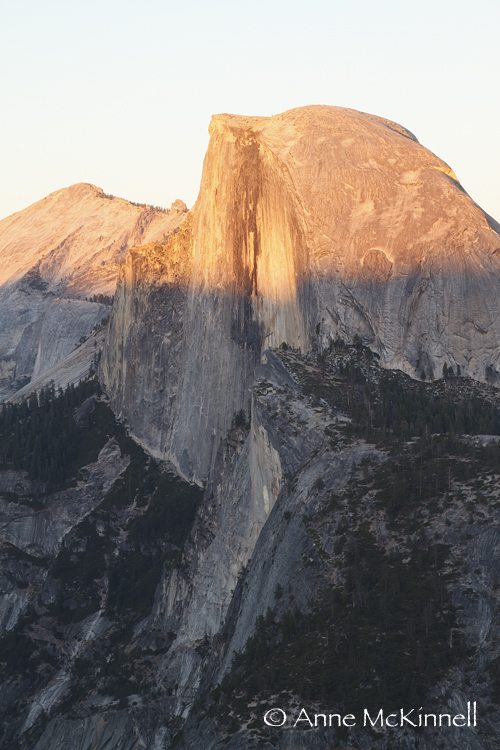
I was faced with an extreme version of this challenge during a recent trip to Yosemite Park in California. Going out at sunrise and sunset to catch the sweet light, I found the valley floor in complete darkness unless the sun was high in the sky.

Here is an example of the type of photo you might come home with in these conditions. The sun was setting on Half Dome lighting up the top of the dome and leaving the valley in darkness.

Half-Dome-1

Read More→

Photography 101: How To Go From Good To Great

This week I am going to tackle a question that has plagued me ever since I turned away from fondling network cables in favor of a pushing a shutter button. That question has been, and probably always will be, how I go from good photos to great photos. While there is no simple answer to point you to and say do this, I have found a few things that have helped me get better in my chosen trade. Let us tackle this shall we?

Step one: Read
Yeah, everyone out there has this tip listed somewhere in the how to become a professional photographer handbook. There is a good reason though. When I decided to pursue my passion of photography, I had no idea what a rule of thirds was, or even how ISO and white balance factored into a photo. I just knew I liked to click a shutter button. It was not until I had a horrible stock submission experience that I realized I had a lot more to learn. Thus, I started reading about photography.

I did not just stop at reading all the technicalities of photography. I also read forums, photographer blogs, and anything else my greedy eyes could be graced with. There is a world of books and websites dedicated to the numbers and science behind photography. You should take all of that in. However, what no technical book is going to teach you is the inspiration. This is where reading photographer blogs really helped. I could see the shots professional photographers posted, enjoy the stories behind the shot, and learn what drove the photographer to capture the scene. This in turn taught me how to find my own inspiration.

Reading never ends by the way. I still pick up magazines, surf the net, and spend a good two or more hours a day reading photography related material. I pick up new tricks, find new inspirations, and even try my hand at styles that are not my own. This is all part of the growing, learning, and improving process. Read More→