Archive for Mark Myerson – Page 5

OSXcellence – CameraBag 2 Review

The original CameraBag was one of the first style and edit apps, not only on Mac, but on iPhone too. It was well built, and performed well, but since then it has been trumped by FX Photo Studio Pro (see my review) in this category. Now, however, the folks at NeverCenter have come back fighting, with their new offering, CameraBag 2.

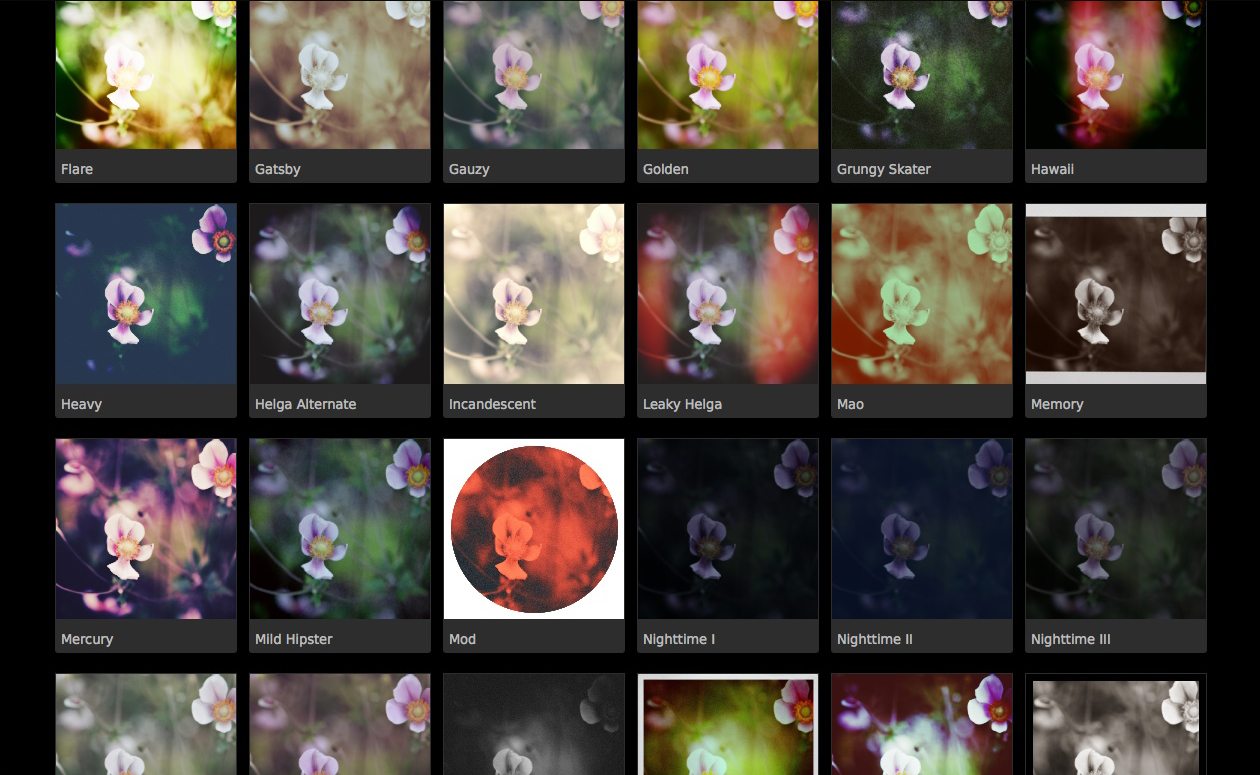
CameraBag 2 is a slick looking app, but pretty looks aren’t the main feature of this app. Editing is conducted using impressive 32-bit processing, RAW is supported, and editing is non-destructive – all high-level features, aimed at the serious photographer. CameraBag 2 includes 100+ filters under the Styles tab, but far more important than this are the editing controls under the Adjust tab. Here you find the standard fare of contrast, saturation, exposure and so on, but additionally, more higher-level controls, such as RGB and luminance curves, selective saturation and grain. When these are used in conjunction with the adjustable inbuilt filters, almost any effect is achievable. What is striking is the quality of manipulated images, thanks to the 32-bit processing; this app produces classy, print quality pictures.

The preset filters that come with CameraBag 2 are very nice, both in terms of quality and quantity. Most are based on various print or film types and techniques, and are (in my opinion) very stylish. Examples include “Cyanotype,” “Leaky Helga” and “Super 1962.”
Read More→

OSXcellence – Inpaint Review

“DAMN!” – you’ve taken a world-beating image, but just as you’re about to Google “Wanderlust photo competition,” a terrible reality dawns on you. There is some pesky passer-by’s blurred head in the bottom corner. What are you going to do?

Teorex, the makers of Inpaint, would no doubt suggest that you head for their app.

Inpaint (temporarily on special offer at £0.69/$0.99) is an app specialising in removing unwanted objects from your image.

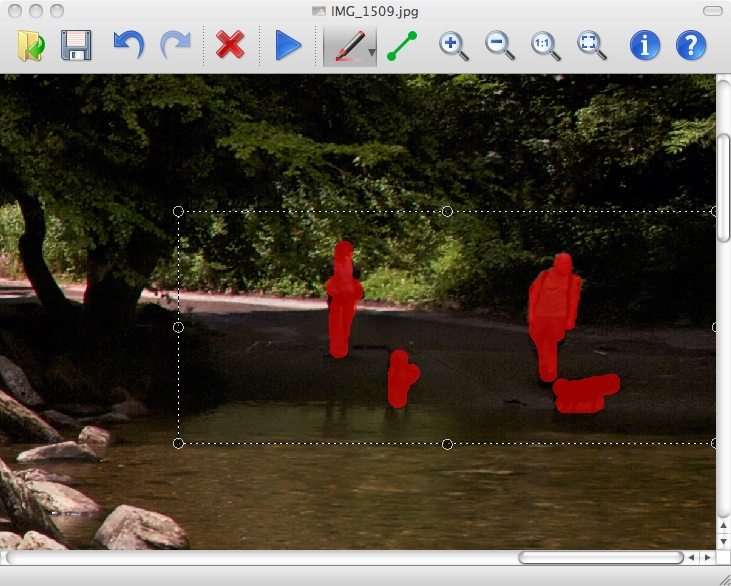
The name implies Inpaint’s method of operation – paint a red overlay onto the objects you wish to remove, and hit the “Inpaint” button to get the app working. The cloning is reasonably snappy, only taking 20 seconds or so, and the results, at first glance, are respectable. Areas in the image around the objects to be cloned are copied, in a manner not unlike Photoshop’s dust cloning tool.

Read More→

OSXcellence – PhotoZoom Pro 4 Review

For some photographers, the need to enlarge an image comes before uploading to a stock library. For others, it’s before a large print is made of the image. But sure enough, for whatever reason, all photographers at some point need to play around with digital image sizing. Photoshop is often used, mostly due to its already prominent place in most photographers’ workflows, whilst hardcore upscalers invest in Genuine Fractals (now known as Perfect Resize). BenaVista hopes that some may turn to their own contender in this market, PhotoZoom Pro, which (as a package) can be used both as a standalone app and photoshop plug-in resizer.

PhotoZoom Pro 4 claims to beat all of the standard resizing methods mentioned above, aided by its “patented S-Spline algorithm” – no, I don’t know what that means either (anyone brave enough can view the basics on Wikipedia). First impressions suggest that whatever S-Spline may be, it helps – this app certainly holds its own compared to other resizers. Small enlargements seem to have no discernible effect on image quality, whilst the results when an image is enlarged to 150% are respectable; stock library standard? Maybe.
Large print of your Grandmother’s dog for her
wall standard? Certainly. Read More→

OSXcellence – Pixlr-o-matic

For some time now, I have admired and used Pixlr-o-matic for adding style to my images. Only now, however, can I feature it in this column, as a Mac version has recently been released.

Pixlr-o-matic doesn’t have the largest range of styles; in fact, it has very few in comparison to other more popular filter apps. The reason I believe Pixlr-o-matic stands out from the crowd is due to the attractiveness, and careful selection, of the filters installed. As a result, when I want one-click stylising of an image, I rarely need to venture further than this app.

Pixlr-o-matic’s interface is very simple, with a live preview illustrating the current effects applied. Filters come on a “film-strip” which is dragged sideways to scroll through the options. The simplicity of this app’s system is refreshing, with a maximum of three effects applicable on any single image – a colour/exposure/sharpness layer, a texture/damage/artistic layer, and a frame layer. None is obligatory, and that’s a good thing, considering that most of the middle stage’s filters range from bizarre to ugly to pointless. The other two layers by themselves, however, provide truly stunning results which replicate great film effects of the past.

Read More→

OSXcellence – SnapHeal Review

MacPhun have been pretty prolific recently, and not to the detriment of app quality – FX Photo Studio and Color Splash Studio were both highly polished releases. Now, they have a new offering, SnapHeal.

SnapHeal’s work consists of erasing (healing), cloning and retouching. These functions work in a similar way to their Photoshop equivalents, and all the brushes have detailed controls. In the case of the eraser, unwanted objects can be selected (and deselected), Color Splash style, using a brush, and there are three eraser modes, each of which uses a different method of copying surrounding areas onto the unwanted object. Then, all that is needed is one click of the Erase button, and that crisp packet in the bottom-left of your otherwise stunning image is banished. This process isn’t immediate, but 20 seconds is usually the upper limit of waiting time.

And the results are worth the wait; the finished erase is clean, and usually blends seamlessly. This is a pleasant surprise, given what a mess many other photo editors make of the healing process.

The Clone/Stamp tool works in exactly the same way as Photoshop’s equivalent, and seems to work just as well. Read More→

OSXcellence – TiltShift App for Mac Review

I, for one, am a fan of the tilt-shift effect. From miniaturisation of objects in images taken from on high, to Lensbaby-style artistic focus targeting, the results are always interesting. The only problem is that tilt-shift lenses are very difficult to operate. Many photographers have turned to Photoshop to recreate the tilt-shift effect digitally. The “does-what-it-says-on-the-tin” TiltShift (for Mac) tries to persuade that it is a better option.

Well it’s certainly a simple option. The focus hotspot is easily manoeuvred, with a drag-to-resize and move interface. This includes control of the graduation from sharp to blurred. Additionally, the amount of blur in “blurred” areas is adjustable (and you WILL need to adjust it, given the aggressive default setting). As a bonus, other simple adjustments such as brightness, saturation and contrast can be made, whilst an adjustable vignette can also be applied. The results are of good quality, particularly if your aim is miniaturisation. If you’re looking for Lensbaby-type swirly blur, then you need to look elsewhere.

TiltShift is a decent quality app, which produces results that are of high enough quality for any purpose. Having said this, would I pay $24.99/£17.49 for this one-function app? Well no, given I can do it for no extra investment using Photoshop…

TiltShift for Mac is available from the Mac App Store, and a demo is available from the TiltShift app homepage. Read More→