Archive for gear – Page 2

A Wedding Photographers Camera Bag

There are a few major tools that I keep in my wedding photography bag. They are essential and necessary at every event I shoot. The first one doesn’t fit in the bag but is a necessity especially when you are shooting a large event and that is a qualified assistant. An assistant doesn’t have to be a second shooter but it definitely helps. An assistant can help carry and keep an eye on equipment. At a family member’s event in downtown San Antonio, the photographer’s second camera was stolen in the middle of the ceremony. You can never trust that your equipment is safe and an assistant can help with that. They can also help with getting the wedding party and family ready for the formal shots and can assist with second shooter responsibilities if necessary.

As far as the equipment I carry I try to keep things as light as possible. You have to remember that you will be on the move and the more stuff you have to carry the more likely you will miss a great shot. I take a small Canon shoulder bag. It’s up to you to have two camera bodies. It never hurts to have a backup and while expensive, it can save your job if one goes down during an event. I have my trusty Canon 30D, one 18-35mm Canon EF f3.5, one 70-300mm Canon EF f4, two Canon 430 EXII Speedlites, and one 580 EX Speedlite. I carry at least 30 AA batteries, a spare camera battery, and spare CompactFlash cards. Two slave flash stands. I also carry lens toilettes because you always need to clean your lens, a pen, and business cards. Read More→

Tying The Knot: Location Scouting

Like a good boy scout you should always be well prepared when shooting weddings. Packing the right kit, making sure the batteries are charged and the memory cards formatted are essential tasks on your checklist, but these become second nature and can be done the night before if necessary.

However, what can’t be done the night before are the location checks. These are crucial, especially when you’re starting out and unfamiliar with wedding and reception venues. Why are checks so important? Well a wedding is an event and once it starts there’s no stopping it! So for each of the big moments during the day you need to know exactly where you’re going to be, which lens you’re going to use and what the camera settings need to be. All under the pressure of missing moments that last a split second.

Think of F1 drivers and professional golfers. Can you imagine any of them turning up for a major competition without having studied the track or course in the most minute detail? Or not knowing exactly what gear or club they’re going to use at any given point? Of course not. They’re professionals and so are you.

Even if you’ve been to some of the more popular venues as a guest, it’s highly unlikely you’ll remember what they were like from a photographer’s point of view with regards to light, space and shooting positions. If you do then well done, but as a guest you really should have been focusing on the wine!

I provide location checks to all my clients as standard and I advise you to do the same. The number of checks will vary depending on the plans for the day, but they typically include the locations for: Read More→

Tenba Launches New Discovery Collection Photography Bags

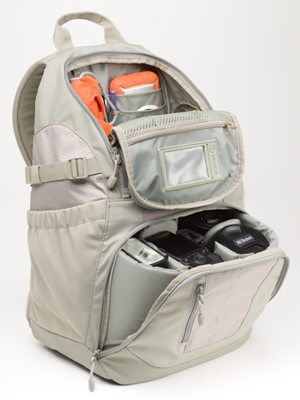
Tenba LogoMay 26, 2011 – PRESS SUMMARY – Leading the way in carrying solutions for over 30 years, Tenba announces the new Discovery collection of incredibly lightweight bags for photographers with an active outdoor lifestyle. This new collection includes an adventure-friendly Photo/Hydration Daypack that’s compatible with a hydration reservoir, and a camera Shoulder Bag that provides quick access to a large camera system. The Discovery collection features water-repellant fabrics, heavy-duty hardware and professional-level protection and construction that meet Tenba’s “Crafted Without Compromise” standard. Both bags are available in black/gray and sage/khaki color combinations.
Read More→

Scenic Outlook – How to Reinvent Your Vision

It’s easy to get into a routine and stay there. While this usually means you are becoming good at something it also has its consequences. Doing the same thing over and over tends to lose its luster, excitement, and opportunity for growth. We are all about growth, right? Nod your head. Yes, yes we are. The best way to force yourself to grow as a photographer is by giving yourself no choice but to step outside of your comfort zone. This is not entirely about growing and learning new things. It’s also about diversifying your work and opening your and your audience’s eyes to a new take on images.

Photography is heavily gear related. You can only be as creative as your gear allows sometimes and it is especially true in the lens department. If you spend a lot of time reading photography related blogs, I’m sure you have heard people screaming (or typing) from the rooftops proclaiming it’s about your vision, not your gear. To an extent this is true but there comes a point where guess what? Gear matters a whole lot. The biggest game changer to your images is glass. Sweet, sweet glass. Due to varying focal lengths and compression, two images from the same exact location can and will look completely different.

Leave it at home – Are you a heavy wide angle shooter like me? Leave that lens at home next time you go out shooting. Enjoy the telephoto brand of glass? Keep it in the bag and strap on the wide angle. This is hands down the best way to force you to expand your vision and skill. For the remainder of this article, I will pretend everyone out there loves their ultra wide angle lens as much as me. When using a niche lens like an UWA, you tend to compose and frame most shots in a similar fashion. Foregrounds stretch, apparent distances expand, and the sun appears very small. Read More→

Cinevate Launches New “Protected By Tenba” Transport Cases

April 17, 2011 – PRESS SUMMARY – Cinevate, in partnership with Tenba®, has introduced a new collection of custom-built cases for their Core and Simplis Rigs, plus Atlas and Pegasus Camera Sliders. These new “Protected by Tenba” cases bring Tenba’s time-tested carrying solutions to Cinevate’s industry-leading filmmaking tools, guaranteeing safe transport for all Cinevate products.
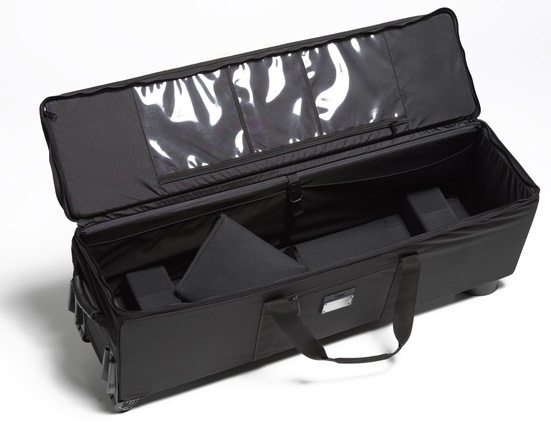
Each new case is designed to protect Cinevate gear in various sizes and configurations, along with accompanying DSLR, video and filmmaking systems. As with all Tenba cases, the materials and hardware used are the best available — including YKK zippers and welded-steel D-rings, plus water-repellant ballistic and Cordura nylon exteriors. Massive reinforcement in all stress and load-bearing areas ensures that the cases will endure the rigors of heavy travel and constant use.

Read More→

Getting Ready to Fly… Should You Ship Your Camera Gear Ahead or Check it? by Charlie MacPherson

It’s no secret that travel is becoming increasingly difficult. Airports haven’t been much fun for the last 20 years or so anyway. But with the increased security following 9/11 and the more recent attempted shoe and underwear bombers, air travel has easily become the most unpleasant part of any trip.

But normally, the best photography sites in the country are not in our back yards. That means travel – often, by air.

So that raises a question.

Should you trust thousands of dollars in camera gear to the tender mercies of the TSA and airline baggage handlers? Or should you ship your gear ahead of you?

There are pros and cons to either. But first, some full disclosure. In addition to my work as a photographer, I own a retail shipping store (similar to a UPS Store) called Postal Center USA in Randolph, MA.

Not that I expect photographers to flock to me to ship camera gear, but I think it’s worth being up-front. It also means that I can speak with some real expertise on the matter.

First, if you can safely carry your gear on board the aircraft, that’s the best option. Your gear stays within your control (except during the TSA “experience”). But my advice is to select seats in the back of the aircraft so you can board earlier. And place your gear in an overhead bin *in front* of you so you can see it.

Check with the airline. Ask what type of aircraft will be used and what the maximum dimensions in the overhead bins are. The only caution is that the aircraft type can change at the last minute.

If you suddenly find yourself unable to use the overhead bins for any reason, politely insist that you “gate check” your gear due to fragility and high cost. That means that you hand it to the baggage handler at the gate, and they bring it back to you at the jetway. There’s a lot less handling that way.

But if you’re like me and have too much gear to fit in that overhead bin, consider shipping it with FedEx or UPS. You can do this safely if you follow a few precautions:

1. Be sure your gear is insured. Check with your homeowner’s or renter’s insurance. And a note of caution – if you shoot anything for pay, these policies will not cover you. In any case, contact your insurance broker and ask about an “inland marine policy”, which covers for replacement value – not depreciated value. I buy mine through PPA (www.ppa.com)

2. Record the model and serial numbers of every piece of gear – just in case.

3. Be sure you have a reputable place to receive your gear. A national chain hotel should be OK. I’d be cautious about one that doesn’t have a big company name behind it. A Hampton Inn is fine. Joe’s Bedbugs & Breakfast Motor Lodge? Not so much.

Consider contacting a shipping store to see whether they will receive and store your gear for a small fee.

4. Ship your gear with either FedEx or UPS so that it arrives at least one business day early. Just in case. And track the shipment early in the process for the best chance of catching any problems.

But unless you have big stacks of money to burn, leave yourself enough lead time so that you can ship via ground. Air shipping gets a lot more expensive!

5. Padlock your bags – even a small padlock through the zipper handles is a deterrent.

I find that even without my “storeowner’s discount”, the cost is well worth it.

I don’t pay for the additional checked bags, I don’t have to carry them, and I even ship my clothing so I can breeze through the airport.

One last hint – remember to carry your GPS with you. If you ship it ahead in your luggage and need directions to find it, well…just remember to keep it with you!

Follow these precautions and enjoy your next flight a lot more. Shipping your gear ahead makes the whole airport experience a lot less stressful, and that’s a luxury well worth paying for.


–

Charlie MacPhersonCharles MacPherson is an award-winning wildlife photographer and resident of Scituate, Massachusetts.
He has been behind a camera since 1973 when shortly after picking up his Dad’s “Argus Brick”, he was inspired to buy his first SLR – a Canon TLb.

His decades-long love affair with photography morphed into an obsession with wildlife photography and a specialty in birds.

He conducts photo-tours around the country as well as workshops and classes in the Boston area and writes two weekly blogs: www.TheAmazingImage.com which covers general photography topics and www.TheWildInFocus.com, focused on wildlife photography and is a blogger for B&H Photo.

Company: The Amazing Image
Phone:
781-470-9111
Email: charlie@TheAmazingImage.com
Twitter: @TheAmazingImage
Facebook:
https://www.facebook.com/charlie.macpherson.1

Photo Credit: © Charles MacPherson

Here’s how you can share your tips, techniques and tutorials on CurrentPhotographer.com

–