Archive for Make Better Photographs – Page 25

Websites for Photographers: Why You Need One & How To Create One: by Robert Brandl

Finding new clients is a big part of being a freelance photographer. It is even harder when you are starting out and have yet to make a name for yourself. Some of the channels you can use to build your reputation include phone, email, word-of-mouth, and networking. But one channel in particular works harder than all the rest.

A website is the bedrock of all your marketing efforts and even targets clients while you sleep. This makes it the ultimate client acquisition tool for the successful freelance photographer.

To ensure your website is working hard for you, make sure it:

  • Has good content related to your specialist area. This will attract the attention of search engines.
  • Builds up a good collection of links to other photographers.
  • Effectively communicates your unique brand.
  • Looks professional.
  • And, of course, is a showcase for your best work.

Photographers and technology

Some freelance photographers love technology and are happy to while away their evenings fine-tuning websites and updating blogs. For others, knowing how to use image editing software is as far as it goes.

Open-source system WordPress.org is probably the most popular website platform among freelancers. It is very easy to use once it has been installed and fitted out with a template.

WordPress’s biggest advantage is that it has an endless supply of plugins and extensions. This means the sky really is the limit in terms of functionality. It has its drawbacks too, though. It needs to be updated on a regular basis to keep your website secure, which is a bit of a hassle – not to mention time-consuming. Thankfully there are easier options. Read More→

The Exploration of Aiden Lair Lodge

During a recent drive through the Adirondacks, I came across this abandoned lodge along route 28N in Minerva, New York. A sad reality exists, especially in the United States that many historical buildings and places are being left to decay, alone in their own abandon. Ideally places like this would be preserved somehow as part of our own American history.

The following photographs document the current state of just one of many such places that despite their historical significance and importance, are being left to rot and decay, forgotten by all but the most curious of people, like me, who stop in for a closer look, before it’s lost and gone forever. Ideally, I’d like to think that my photographic documentation of abandoned places such as this will raise some much needed awareness and possibly lead to some preservation efforts. The photos presented here can also be seen here, on Flickr.

A Little Privacy Please

Tying The Knot: Harry Potter And The Virtuous Circle Of Weddings

Harry Potter’s annoying isn’t he? One minute he’s a wimpy kid who lives in a closet, then a fancy wand and a few games of Quidditch later and he’s the most powerful boy wizard ever! How did he get that gig?! And every year amazing things just happen; like epic battles with He Who Sounds Like Vol-Au-Vent!

If only it was just as easy to become a professional wedding photographer, right?! Why can’t you equip yourself with a decent camera, do a few shoots and then have weddings just magically come looking for you?

Well the good news is that it can and does happen. Because it happened to me. So allow me to tell you the story of my first wedding and a certain someone called Harry!

I was in the classic Catch 22 situation: aching to shoot a wedding but lacking any previous experience and with no idea when I was going to get my first taste! However, I knew when the chance came I would be ready. In a previous post I mentioned how I spent a couple of years prior to this point learning and practising four main genres of photography, knowing that they would prepare me to be a very competent second shooter. Well now I wanted to put my theory to the test!

My lucky break came through my day job. I work in a large advertising agency which is populated with young, cool, creative types and I had established myself as the company’s most passionate amateur photographer (read: I talked about my photography at every opportunity!), so it was really just a matter of time until an opportunity came my way. And it came in the form of my female co-worker and fellow camera enthusiast Harry. Harry was a couple of months away from marrying Sam at an outdoor ceremony up at Freshwater, one of Sydney’s pretty northern beaches. She had been a fan of my work for some time and invited me along as a second shooter so I could gain some invaluable experience and kickstart my wedding portfolio. Read More→

HDR Series – Getting Started, Part 2: Image Management in Aperture 3

So you’ve just walked in the door and put your bag down, now what? How do you get your files ready for HDR? I will describe how I import my brackets into (the best file management program ever) Aperture 3. 🙂

Step #1: Import

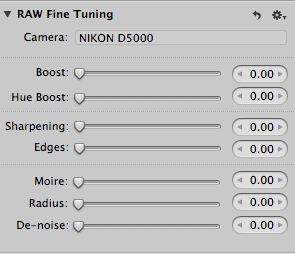
– Fire up Aperture 3. Under the “Adjustments” tab you’ll find “RAW Fine Tuning”. You’ll want to move all 7 sliders to “0” zero and create an hdr preset. (clicking on the gear icon will show the save preset option. More on why this is necessary later)

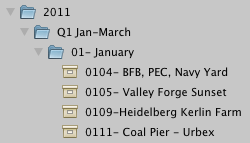
– Under the “Library” tab create a new “Folder” with the Year and another inside that folder with the Month.

– The “Import” tab should pop up and it will look something like this. Read More→

Photography 101: How to Break a Photographic Rut

Hitting a photographic slump can happen to even the best photographer. You shoot the same subject matter, process with the same techniques, fill client requests, and work day in and day out doing the same thing. This maybe great for the bank account, but sometimes that can destroy your creativity. Hitting the creative wall can be detrimental to your mood. However, there are some solutions to help break free from this black hole.

One of the easiest things you can do is try something new. This can be anything from shooting different subject matter, processing a photo with a new technique, or even just changing up your normal shooting times. Simply altering one aspect of your photography can not only inspire you, but it may also open your eyes to a completely new photographic world you may not have considered before. Change can be a very good thing!

While we are on the subject of change, why not change up your style for a week. In fact, why not combine several styles into one photo. There are no rules that say you cannot shoot a black and white HDR macro image of a bottle cap. Maybe you want to shoot some long exposure street photography. Again, you are dabbling in something new and foreign, yet that can lead to new tools and personal styles you draw upon at a later time.

Another thing you can do is start some sort of photography project for yourself. Maybe you want to shoot a self-portrait every day for a year, or maybe you roam around your state taking photos of churches. The key to these projects is to make them something that interests you on some deep personal level. When you start to tire of the everyday normalcy and find you just don’t have it in you to press that shutter button, look at your project list and work on some of your personal projects. Read More→

Polaroid: Lo-Fi At An Instant

The instant camera is a type of camera that generates a developed film image. The most popular types to use self-developing film were formerly made by Polaroid Corporation.

The invention of modern instant cameras is generally credited to American scientist Edwin Land, who unveiled the first commercial instant camera, the Land Camera, in 1948, a year after unveiling instant film in New York City. The earliest instant camera, which consisted of a camera and portable darkroom in a single compartment, was invented in 1923 by Samuel Shlafrock.

In February 2008, Polaroid announced it would discontinue production of film, shut down three factories and lay off 450 workers. Sales of chemical film by all makers have dropped by at least 25% per year in the first decade of the 21st century, and the decline is likely to accelerate. Fujifilm is now the only remaining supplier of instant film in the United States. However, in October 2009, Polaroid announced it would bring back its classic instant film cameras, after announcing the year before that production was to be stopped.
–Wikipedia

Since the era of digital photography becoming mainstream, the use of traditional film and instant cameras has become less common. With few exceptions, it seems that most photographers are turning to digital cameras, computers, and electronic printers; everything that was commonly found in a darkroom has now been replaced with digital equipment. Although digital equipment has many advantages such as lower cost, higher productivity (batch processing, automation, etc.), and ease of use, old-school film and instant formats still remain popular among some photographers.

A friend of mine on Flickr named Ashley Burress, is one of the few photographers who refuse to succumb to the all-digital fad, and who is still an instant print enthusiast. She gave me permission to use her Polaroid photographs as part of my article in exchange for a link to her blog and mention of her Flickr photostream. Most recently, Ash has posted a collection of instant photographs from a recent trip to The Nashville Zoo, which are a must see. All of the photographs presented here are Copyright Ashley Burress, and used with permission.

Read More→