Archive for Make Better Photographs – Page 31

Photography 101: Break Out Some Angles

One of the simplest ways to increase the visual appeal of your photos is with different points of view. Here is what I mean by changing your view points, or angles. We have all seen photos where the subject is straight on, with a relatively generic background. While the scene might be nice, it does not do enough to differentiate itself from the flood of similar types of photos online.

This is where you, your eye, a bit of creativity, and a small bit of work come into play. Prepare to lie on the ground, climb a tree, and generally look like a goon while you try to catch “the shot.” There is a reason why professionals are willing to lay in the dirt, and that is to create an image that is both pleasing to the eye while providing a different view point to set the photo apart.

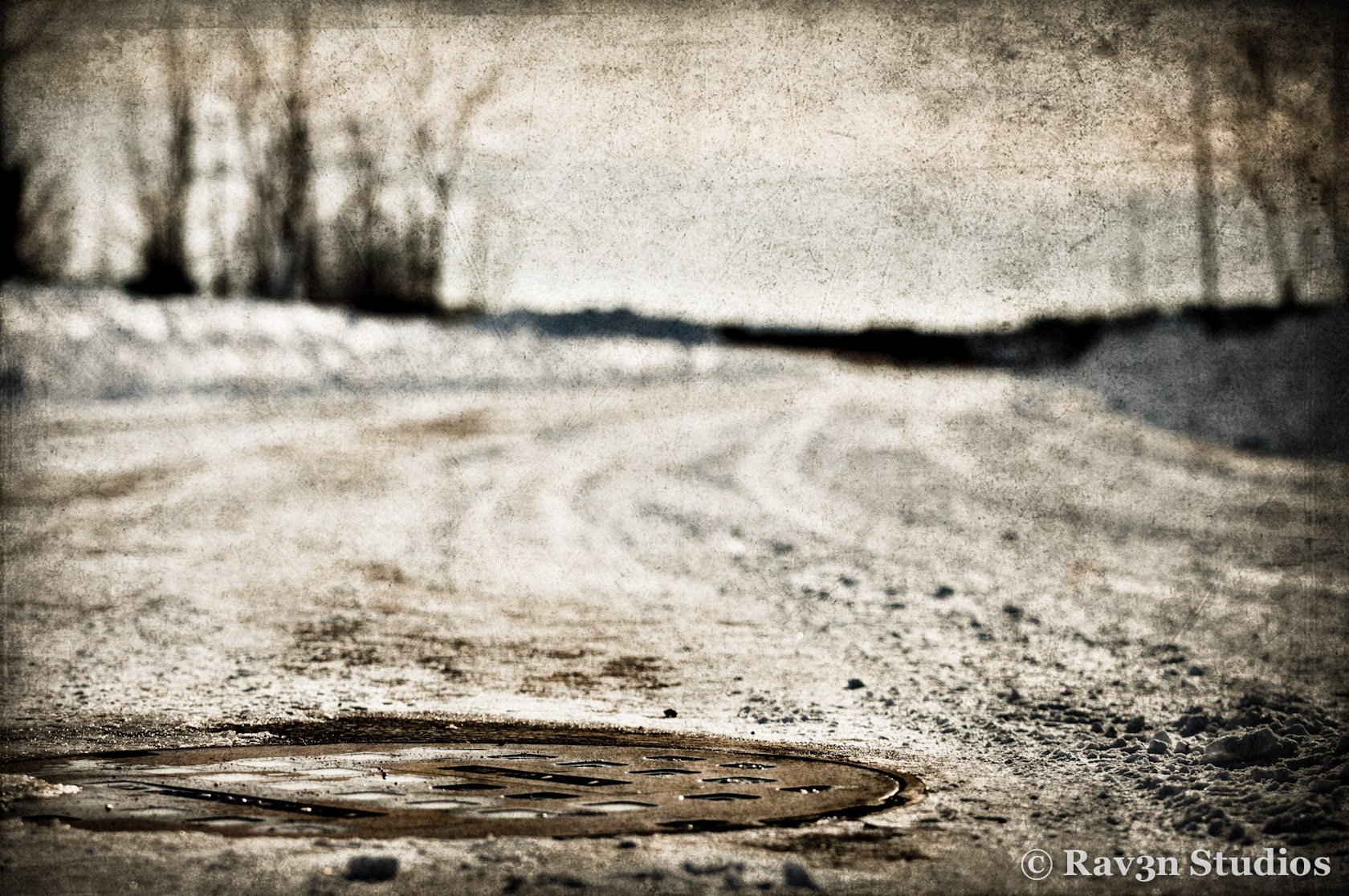
Changing your viewpoint to create something interesting maybe as simple as getting close to the ground. One example of this is in my shot of a manhole cover on a snowy street. You can tell this is a manhole, yet the angle at which the photo is taken obscures this item. The focal point is also shifted to the top of the rusty cover. This setup gives you a different way of seeing an otherwise ordinary subject.
skid-row

Read More→

Lomography 101

Lomography emphasizes casual, snapshot photography. Characteristics such as over-saturated colors, off-kilter exposure, blurring, “happy accidents,” and alternative film processing are often considered part of the “Lomographic Technique”.
–Wikipedia

A lomographic camera is perhaps the pinnacle of grunge photography. Similar to the Holga, the Lomo camera produces unique results that are unique and specific to each individual camera. Specifically, the Lomo will typically produce images that are of selective focus, over or under exposure, indense off-center vignetting, and over saturation.

Shown here is an example of an actual photo taken with a Lomographic camera using a fisheye lens.

Read More→

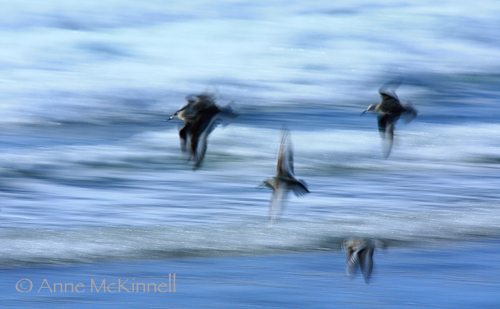
Creating Abstract Impressions: by Anne McKinnell

Impressionist painters were more concerned with colour than line. Their goal was to leave the viewer with an impression of the scene rather than a literal depiction and their works often included a sense of movement.

Photographers can also create emotional abstracts that leave only an impression of the original subject by using a slow shutter speed, from 1/50 of a second to 1/2 second, and moving the camera while the shutter is open or allowing a moving subject to pass in front of the camera.

This technique is fun because every frame turns out different. An afternoon can easily slip by as if moving on the waves of colour. There are 3 ways of approaching this technique:

1. Pan with a moving subject
When you move the camera while the shutter is open, it is called panning. With a moving subject, you want to pan at the right speed to keep the subject in the frame. Panning on a moving subject with a very slow shutter speed has a drastically different result than panning with a faster shutter speed. A faster shutter will have more sharpness in the subject and show some blur in the background. A very slow shutter speed is more abstract and allows you to really feel the movement while retaining just enough detail in the subject that you can still tell what it is.

1/50 Second, f/18, ISO 100

Read More→

Abandoned Stuckey’s In Winter

Stuckey’s originated in the early 1930s in Eastman, Georgia. When founder W. S. Stuckey, Sr., had a successful pecan harvest from his family’s orchard he decided to offer a portion of the crop for sale in a lean-to roadside shed. Many Florida-bound tourists traveling U.S. Route 23 stopped to purchase the pecans.

In 1960, W. S. Stuckey attempted to create a hotel chain called Stuckey’s Carriage Inn, but opened only four locations. In 1967, Stuckey’s merged with Pet Milk.

The company at its peak had over 350 locations, which dwindled to fewer than 75 after a decline in the late 1970s under ownership by Pet. It was repurchased by former Congressman W.S. Stuckey, Jr., in 1985. It currently has over 200 franchise stores in 19 states. – Wikipedia

While traveling along Interstate 80, my true love, Angie spotted this abandoned Stuckey’s location in Corsica, Pennsylvania. Upon returning home, Angie was awesome enough to dig up a ton of information about this place, including this locations date of closure, which happened to be some time in 1972.

Despite having been closed and abandoned for many years, there were still remnants of the prior business. I found it amazing that after all these years, there were still some items that were left behind and forgotten.

Outside (3)

Read More→

Getting Ready to Fly… Should You Ship Your Camera Gear Ahead or Check it? by Charlie MacPherson

It’s no secret that travel is becoming increasingly difficult. Airports haven’t been much fun for the last 20 years or so anyway. But with the increased security following 9/11 and the more recent attempted shoe and underwear bombers, air travel has easily become the most unpleasant part of any trip.

But normally, the best photography sites in the country are not in our back yards. That means travel – often, by air.

So that raises a question.

Should you trust thousands of dollars in camera gear to the tender mercies of the TSA and airline baggage handlers? Or should you ship your gear ahead of you?

There are pros and cons to either. But first, some full disclosure. In addition to my work as a photographer, I own a retail shipping store (similar to a UPS Store) called Postal Center USA in Randolph, MA.

Not that I expect photographers to flock to me to ship camera gear, but I think it’s worth being up-front. It also means that I can speak with some real expertise on the matter.

First, if you can safely carry your gear on board the aircraft, that’s the best option. Your gear stays within your control (except during the TSA “experience”). But my advice is to select seats in the back of the aircraft so you can board earlier. And place your gear in an overhead bin *in front* of you so you can see it.

Check with the airline. Ask what type of aircraft will be used and what the maximum dimensions in the overhead bins are. The only caution is that the aircraft type can change at the last minute.

If you suddenly find yourself unable to use the overhead bins for any reason, politely insist that you “gate check” your gear due to fragility and high cost. That means that you hand it to the baggage handler at the gate, and they bring it back to you at the jetway. There’s a lot less handling that way.

But if you’re like me and have too much gear to fit in that overhead bin, consider shipping it with FedEx or UPS. You can do this safely if you follow a few precautions:

1. Be sure your gear is insured. Check with your homeowner’s or renter’s insurance. And a note of caution – if you shoot anything for pay, these policies will not cover you. In any case, contact your insurance broker and ask about an “inland marine policy”, which covers for replacement value – not depreciated value. I buy mine through PPA (www.ppa.com)

2. Record the model and serial numbers of every piece of gear – just in case.

3. Be sure you have a reputable place to receive your gear. A national chain hotel should be OK. I’d be cautious about one that doesn’t have a big company name behind it. A Hampton Inn is fine. Joe’s Bedbugs & Breakfast Motor Lodge? Not so much.

Consider contacting a shipping store to see whether they will receive and store your gear for a small fee.

4. Ship your gear with either FedEx or UPS so that it arrives at least one business day early. Just in case. And track the shipment early in the process for the best chance of catching any problems.

But unless you have big stacks of money to burn, leave yourself enough lead time so that you can ship via ground. Air shipping gets a lot more expensive!

5. Padlock your bags – even a small padlock through the zipper handles is a deterrent.

I find that even without my “storeowner’s discount”, the cost is well worth it.

I don’t pay for the additional checked bags, I don’t have to carry them, and I even ship my clothing so I can breeze through the airport.

One last hint – remember to carry your GPS with you. If you ship it ahead in your luggage and need directions to find it, well…just remember to keep it with you!

Follow these precautions and enjoy your next flight a lot more. Shipping your gear ahead makes the whole airport experience a lot less stressful, and that’s a luxury well worth paying for.


–

Charlie MacPhersonCharles MacPherson is an award-winning wildlife photographer and resident of Scituate, Massachusetts.

He has been behind a camera since 1973 when shortly after picking up his Dad’s “Argus Brick”, he was inspired to buy his first SLR – a Canon TLb.

His decades-long love affair with photography morphed into an obsession with wildlife photography and a specialty in birds.

He conducts photo-tours around the country as well as workshops and classes in the Boston area and writes two weekly blogs: www.TheAmazingImage.com which covers general photography topics and www.TheWildInFocus.com, focused on wildlife photography and is a blogger for B&H Photo.

Company: The Amazing Image
Phone:
781-470-9111
Email: charlie@TheAmazingImage.com
Twitter: @TheAmazingImage
Facebook:
https://www.facebook.com/charlie.macpherson.1

Photo Credit: © Charles MacPherson

Here’s how you can share your tips, techniques and tutorials on CurrentPhotographer.com

–

Photography Without Labels

When Trevor asked me to contribute Cityscape and Landscape articles to the site last year I was honored. 2010 was a great learning year for me and in 2011, I’ve been able to reflect on all of my hard work for the past 365 days.  Honoring the gems and realizing my mistakes, It’s allowed me to focus on this new year with a new mind frame.  One thing I decided to remove is the word “scape” from my categories of work. I prefer to use the terms “City” & “Land”.  For me this broadens the subject matter for which I can write about, because recently I’ve been shooting a lot of different subject matter when it comes to city and land photography.  When I think of the word “scape”, I think of skyline shots, and sunsets over the ocean, but in fact city and land photography is so much more than that. In my recent adventures I’ve found ways to produce city and land images together, like the examples below.


Read More→